Home > Small Space > Corner Dining
Corner Dining Ideas That Save Space in Small Homes
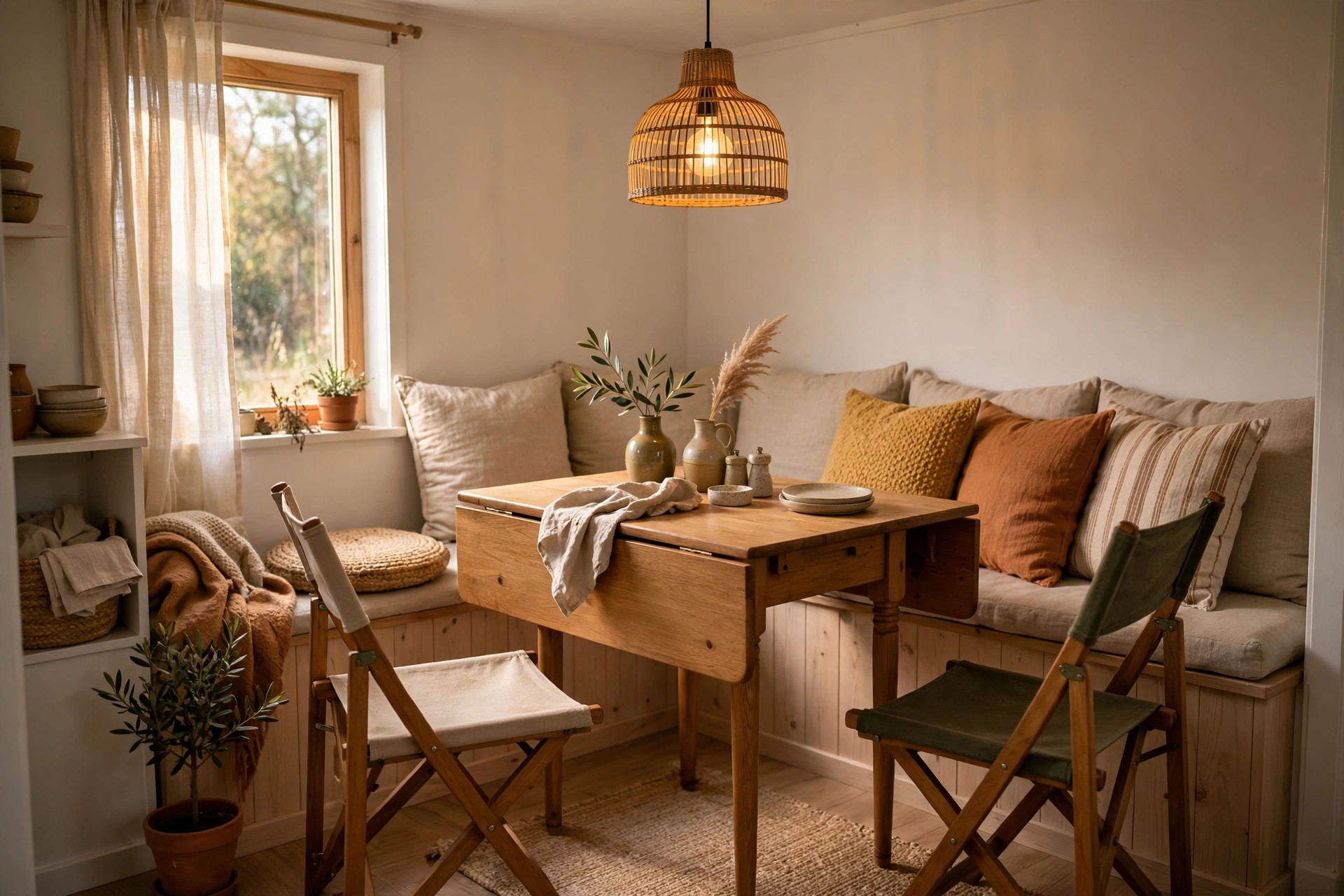
Small homes rarely have a dining room, but everyone still needs a place to eat that is not the sofa. The corner of a living room or kitchen, often wasted, can become a proper dining spot with the right pieces. A good corner nook also gives a small home a natural place for homework, coffee and quiet work during the day.
These seven ideas show how to build a corner dining nook that seats two every day and more when guests come, then folds or tucks away so the room still feels spacious the rest of the time. The trick is choosing pieces that shrink, fold or tuck away, so the corner works hard at mealtimes and disappears afterwards.
The 7 Corner Dining Ideas
1. Start with a gateleg or drop-leaf table
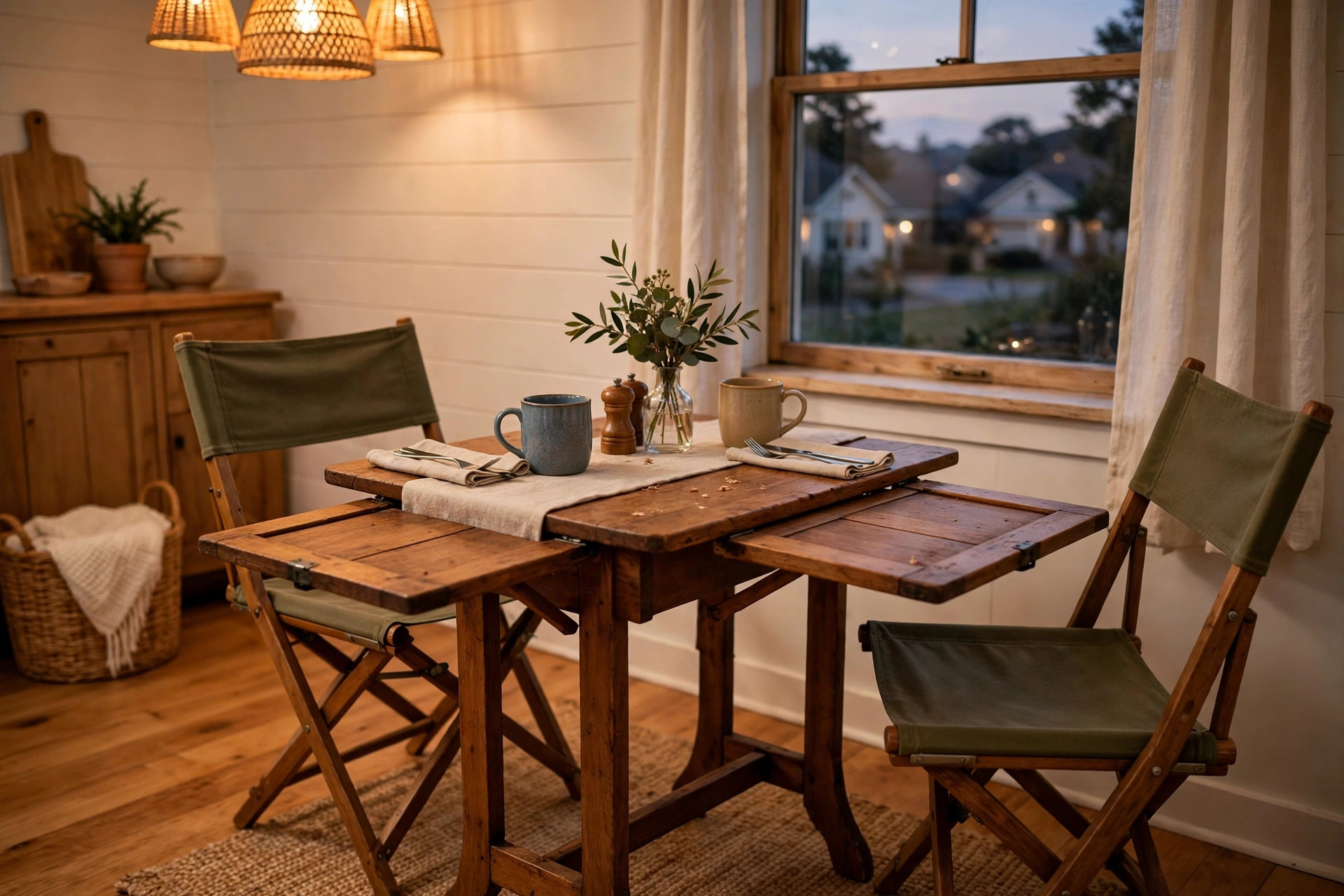
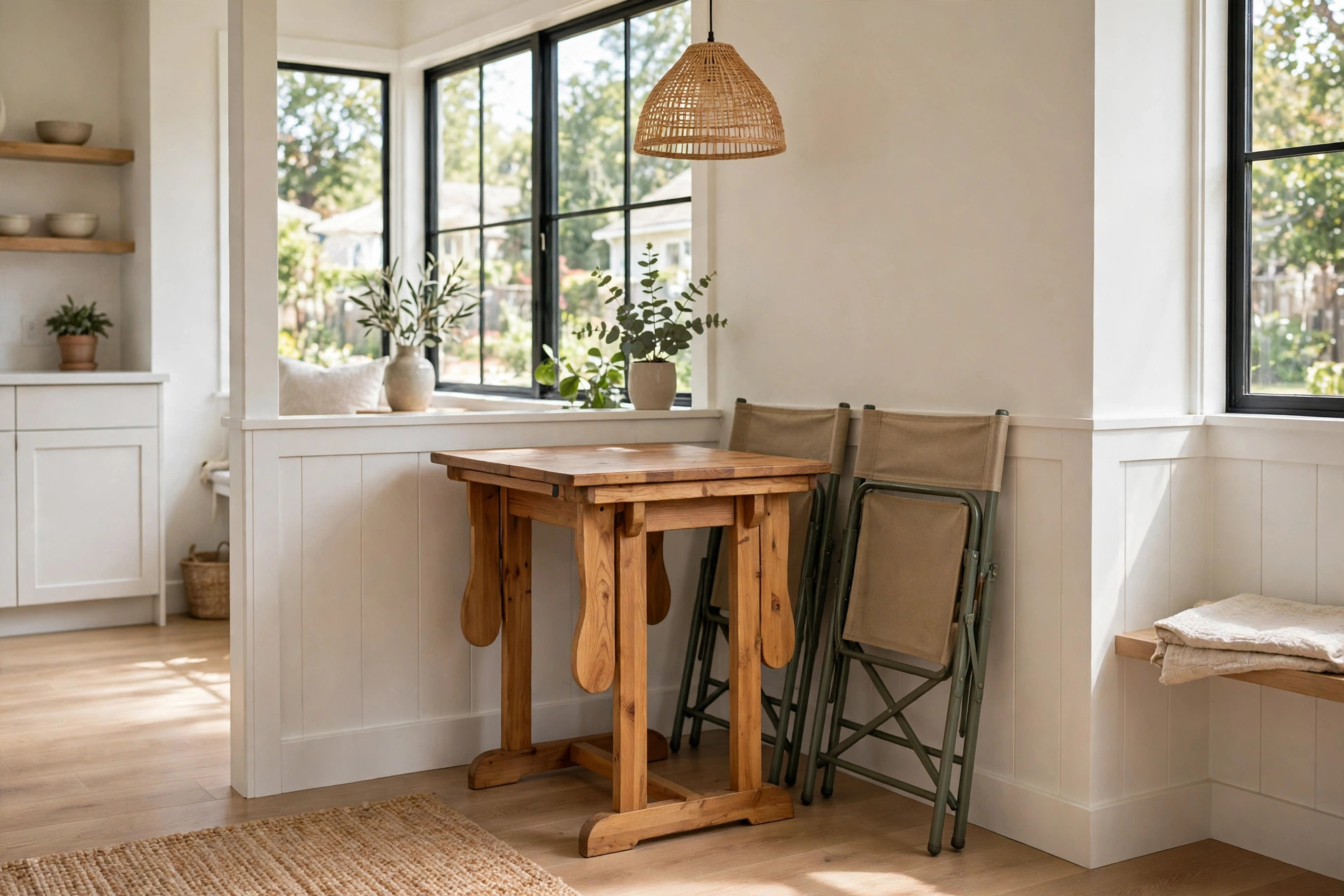
A gateleg table is the small-home classic for good reason. With both leaves down it sits slim against the wall as a console; with one leaf up it seats two for daily meals; with both leaves up it becomes a proper table for four. In a corner, push the fixed side into the corner and open only the leaf you need. The table earns its floor space every day instead of dominating the room between meals. A gateleg also makes a handy desk, so the same corner can hold a laptop on work-from-home days.
2. Add a corner bench for built-in seating
A bench along one or both walls of the corner seats more people in less space than chairs, because there are no legs to work around and no gaps between seats. A storage bench is even better, swallowing table linen, board games or spare cushions inside. Add two cushions against the wall for comfort and the nook instantly feels like a cafe corner. Benches also let children squeeze in happily at family meals. Cushions in washable covers keep the bench practical when meals get messy.
3. Use folding chairs for the open sides
Folding chairs solve the guest problem. Keep two at the table for everyday use and store two more flat behind a door or under the bench for when friends come. Choose chairs that match the table wood or colour so the set looks intentional, not borrowed. When not in use, folding chairs disappear, which is exactly what a small room needs. A slim chair that hangs on wall hooks saves even more floor. Folding chairs with padded seats stay comfortable through a long dinner with friends.
4. Hang one warm pendant over the corner
A single pendant light over the corner table defines the dining zone better than any rug or screen. It tells the eye where eating happens, pools warm light on the table in the evening, and makes even a Tuesday dinner feel like an occasion. Hang it low enough to feel intimate but high enough to see across the table comfortably. A warm bulb is essential — cool light over food never looks appetising. A dimmable pendant lets the same corner feel bright for homework and soft for evening meals.
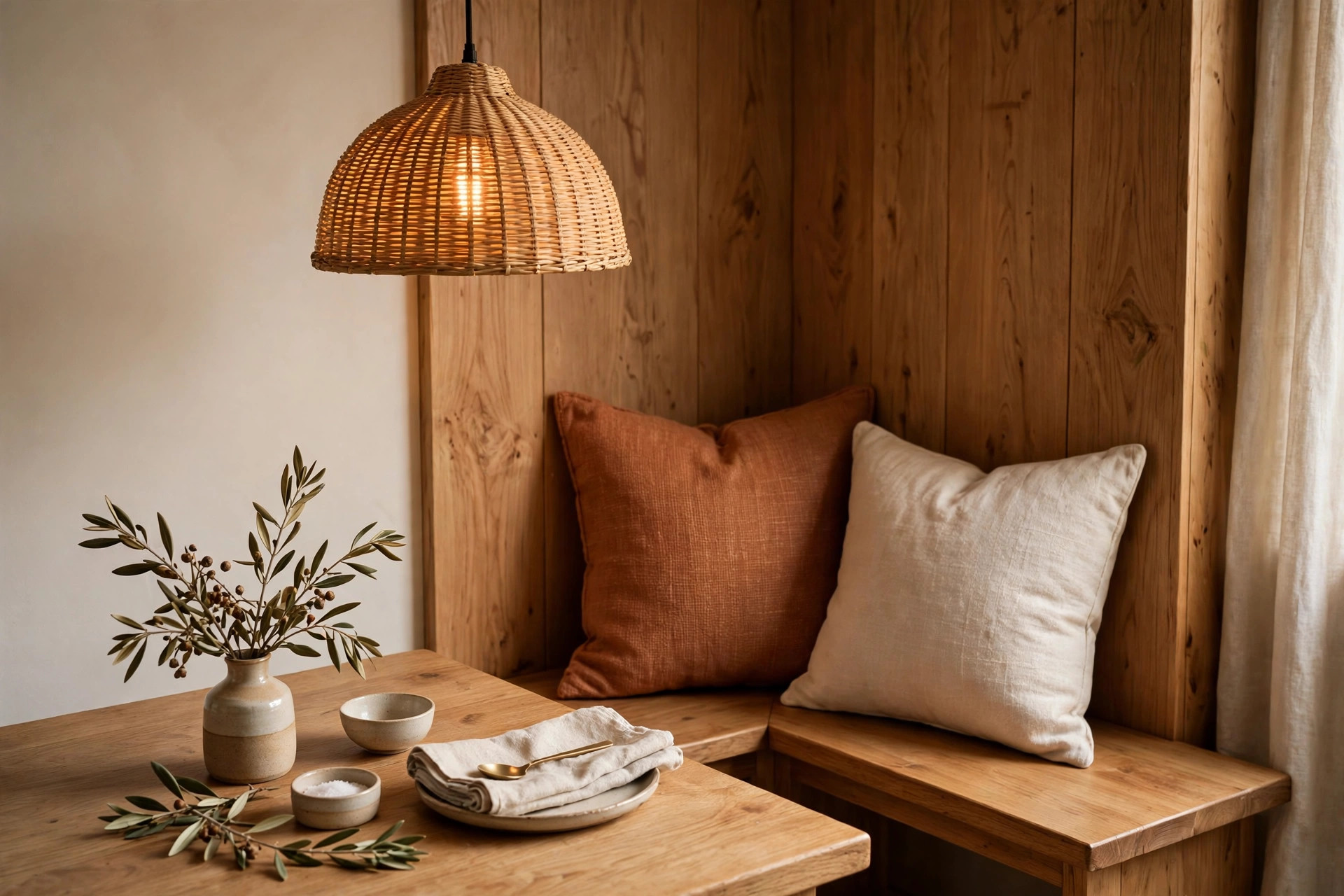
A corner, a gateleg table and a bench — dining without a dining room.
5. Anchor the nook with a small rug
A rug under the corner table marks the dining area and softens the whole corner. Choose a flat-weave style that chairs and bench feet slide on easily, and size it so the table and seating sit on it or at least the front legs do. In a small home, a rug also protects the floor from chair legs and spills. Pick a warm, forgiving pattern that hides crumbs between cleans. A rug also warms bare feet on winter mornings, which makes the nook the favourite breakfast spot.
6. Use the wall for storage and display
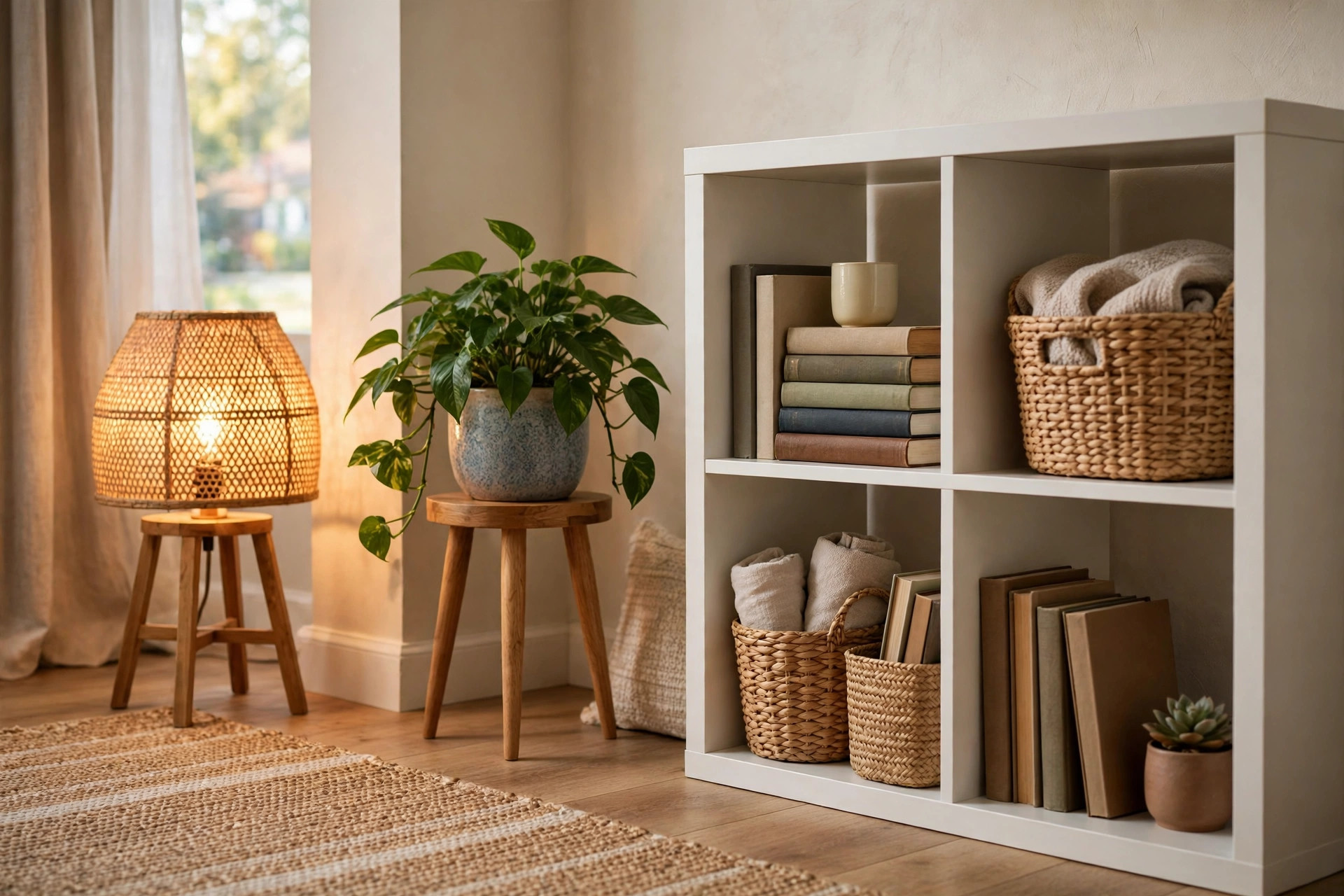
The two walls of a corner are free vertical space. A slim shelf above the bench can hold everyday plates, glasses or a small plant, freeing kitchen cupboards. Wall hooks can hang a favourite mug or a folded tablecloth. Keep the display light and useful rather than decorative clutter — in a dining corner, the things you reach for daily look best on show. A small framed print finishes the nook. Keep shelves at a height you can reach from the bench, so everyday plates are always to hand.
7. Keep a folding tray or cart nearby
A slim rolling cart or folding tray table beside the nook gives you a serving surface that tucks away after the meal. Use it for drinks, extra dishes or a laptop during the day, then roll it to the kitchen when guests arrive. In a small home, one flexible piece that moves between rooms is worth more than a fixed sideboard. Style the top with a small vase so it looks finished even when empty. Choose a cart with a handle, so moving it between rooms never scrapes the floor.
Shop the look
These are the products pictured in the ideas above. Product names only — no links and no prices yet, so you can find them in stores yourself.
- NORDEN gateleg table, birch
- FRÖSVI folding chair, beech
- FRÖSVI folding chair, white
- RÅSKOG utility cart, white
- Warm white bulbs
- Soft wool rug in warm cream
- Wooden picture frames, mixed sizes
- Ceramic vase in a natural tone
- Trailing plant in a plain pot
Product names are given to help you find them in stores. Prices and links will be added later, once our shopping links are ready.
Frequently asked questions
How many people can a corner dining nook seat?
A typical corner with a gateleg table and a bench seats four comfortably and six at a squeeze. The bench side takes three, and folding chairs take the open sides. For everyday life, two people use one leaf of the table and the rest of the room stays open. Measure your corner first — most nooks need about the width of the table plus a bench depth.
What table shape works best in a corner?
Round tables suit corners well because there are no sharp edges to catch on, and a gateleg or drop-leaf table suits them best of all because it shrinks when not in use. Square tables pushed into a corner also work, with the bench along two sides. Avoid a large fixed rectangular table in a small corner — it will block movement and make the room feel cramped.
How do I make a corner dining area feel cosy?
Warm light, cushions and a rug do most of the work. Hang one pendant with a warm bulb over the table, add cushions to the bench, and lay a flat-weave rug underneath. A small plant or vase on the table and one framed print on the wall finish the nook. Cosy comes from softness and glow, not from filling the corner with decor.
More to love from Zentro