Home > Living Room > Japandi
Japandi Living Room Ideas for Calm, Simple Style
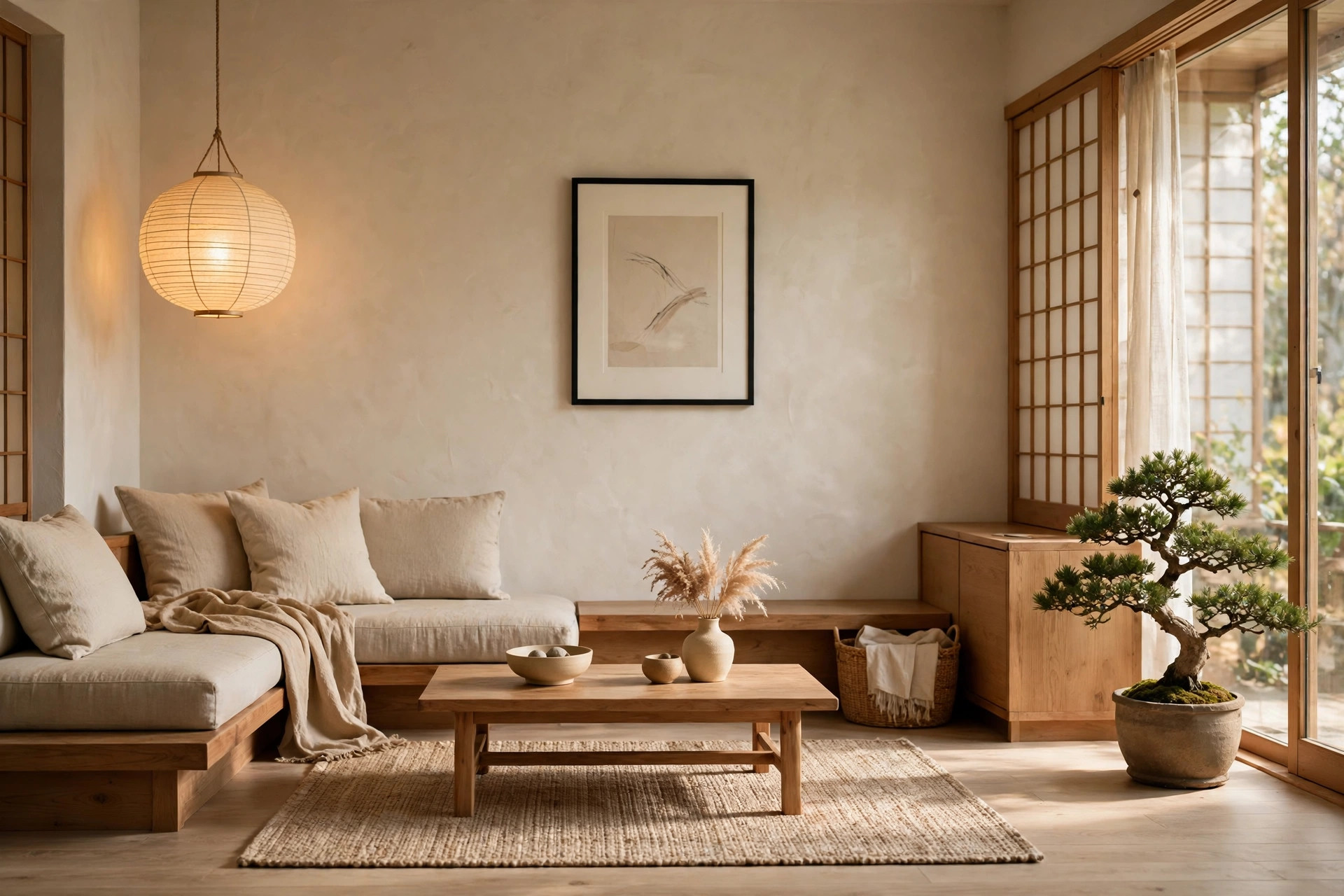
Japandi is Japanese calm meets Scandinavian warmth. From Japan it takes low furniture, empty space and natural materials; from Scandinavia it takes warm wood, soft textiles and light. The result is a living room that feels peaceful the moment you walk in — not empty, but quiet.
It is a style for people who are tired of clutter and tired of rooms that shout. Nothing in a Japandi room competes for attention. Everything has a place, everything is made of something natural, and there is always a little empty space left over.
These seven ideas bring that calm into an ordinary living room. They are slow changes, not a shopping list — and the first one costs nothing at all.
The 7 Japandi Living Room Ideas
1. Choose low furniture that sits close to the floor
Japandi furniture is low. A low sofa, a low coffee table and a low bookcase make the room feel grounded and calm, because your eye travels across the room instead of up and down. Low furniture also makes the ceiling feel higher, which makes a small room feel bigger. You do not need to buy new furniture — a low side table and a floor cushion can set the tone.
2. Use warm wood and beige, not white and grey
Japandi is warmer than Scandinavian style. The base colours are warm beige, soft cream and natural wood, not stark white. A warm wood side table, a beige cushion and a cream rug make the room feel like a place to rest, not a place to photograph. Keep the palette to three colours at most, and let the wood do the talking.
3. Add one black accent, and only one
Every Japandi room has a single dark note — a black frame, a black vase, a black lamp base. One black accent gives the room depth and stops the beige from looking washed out. Two or three black things start to look like a theme; one looks like a decision. Choose the accent you love most and remove the rest.
4. Light the room with a paper lamp
A paper lamp is the Japandi light. Its glow is soft and diffused, with no harsh shadows, and its shape is simple and quiet. A paper star shade on a table lamp, or a floor lamp with a paper shade, gives the evening a warm, calm light that a bare bulb never will. Keep the bulb warm and dim, and let the paper soften it.
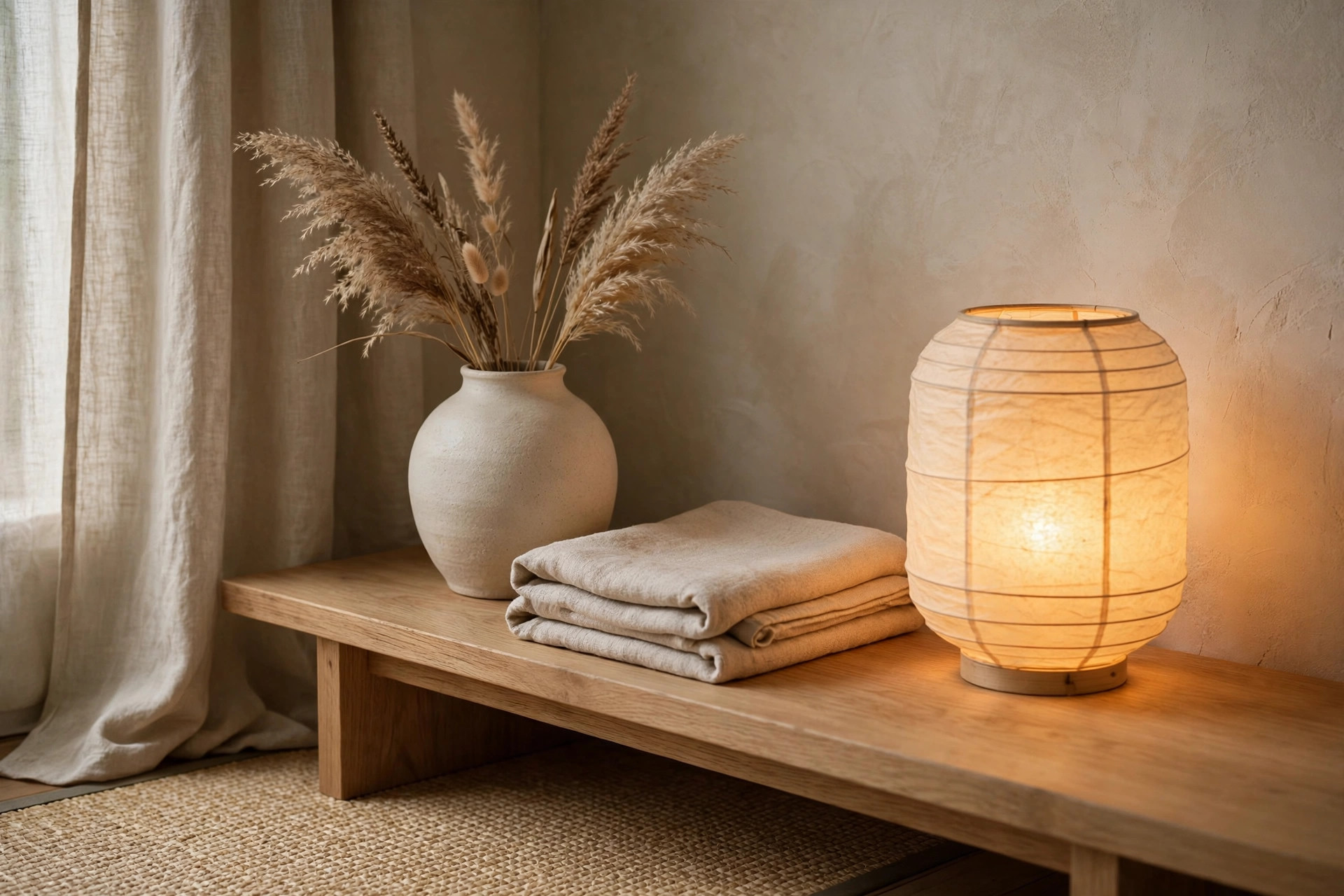
Low, warm, quiet — calm you can sit in.
5. Keep every surface uncluttered
In a Japandi room, a surface holds one thing, not five. A coffee table holds a book or a vase, not a book and a vase and a tray and a remote and a candle. Clear everything, then put back one thing per surface and live with it for a week. You will be surprised how little you miss the rest — and how much calmer the room feels.
6. Choose natural textures over patterns
Japandi texture comes from materials, not patterns: linen, wool, wood, ceramic, stone. A linen cushion, a wool throw, a ceramic vase and a wooden table give the room depth without a single pattern. Patterns shout; textures whisper. If you love pattern, keep it to one small cushion and let the textures do the rest.
7. Leave one empty space on purpose
The most Japandi idea of all is to leave a space empty on purpose — an empty shelf, an empty corner, a bare stretch of wall. In Japanese design, empty space is not missing decoration; it is part of the design. It gives the eye somewhere to rest, and it makes the things you do have look more beautiful. Try it for a week and see if the room feels calmer.
Shop the look
These are the products pictured in the ideas above. Product names only — no links and no prices yet, so you can find them in stores yourself.
- POÄNG armchair
- LERSTA floor reading lamp
- STRÅLA lamp shade, paper star, white
- LACK side table, white
- BILLY bookcase
- SANNAHED frame
- FÄRGKLAR mug, light pink
- Linen cushion covers in warm beige
- Ceramic vase in a natural tone
Product names are given to help you find them in stores. Prices and links will be added later, once our shopping links are ready.
Frequently asked questions
What is the difference between Japandi and Scandinavian style?
Scandinavian style is bright and white; Japandi is warmer and calmer, with beige tones, low furniture and more empty space. Japandi borrows the Japanese love of simplicity and natural materials, while Scandinavian style leans brighter and lighter.
Is Japandi style expensive?
No — it is one of the cheapest styles, because it is about removing things, not buying them. Clearing surfaces, choosing three warm colours and adding one paper lamp cost very little.
Can I do Japandi in a small living room?
Yes, it suits small rooms well. Low furniture makes the ceiling feel higher, empty space makes the room feel bigger, and a calm palette stops a small room from feeling busy.
More to love from Zentro