Rolling Cart Ideas for a Tiny Kitchen That Needs Storage
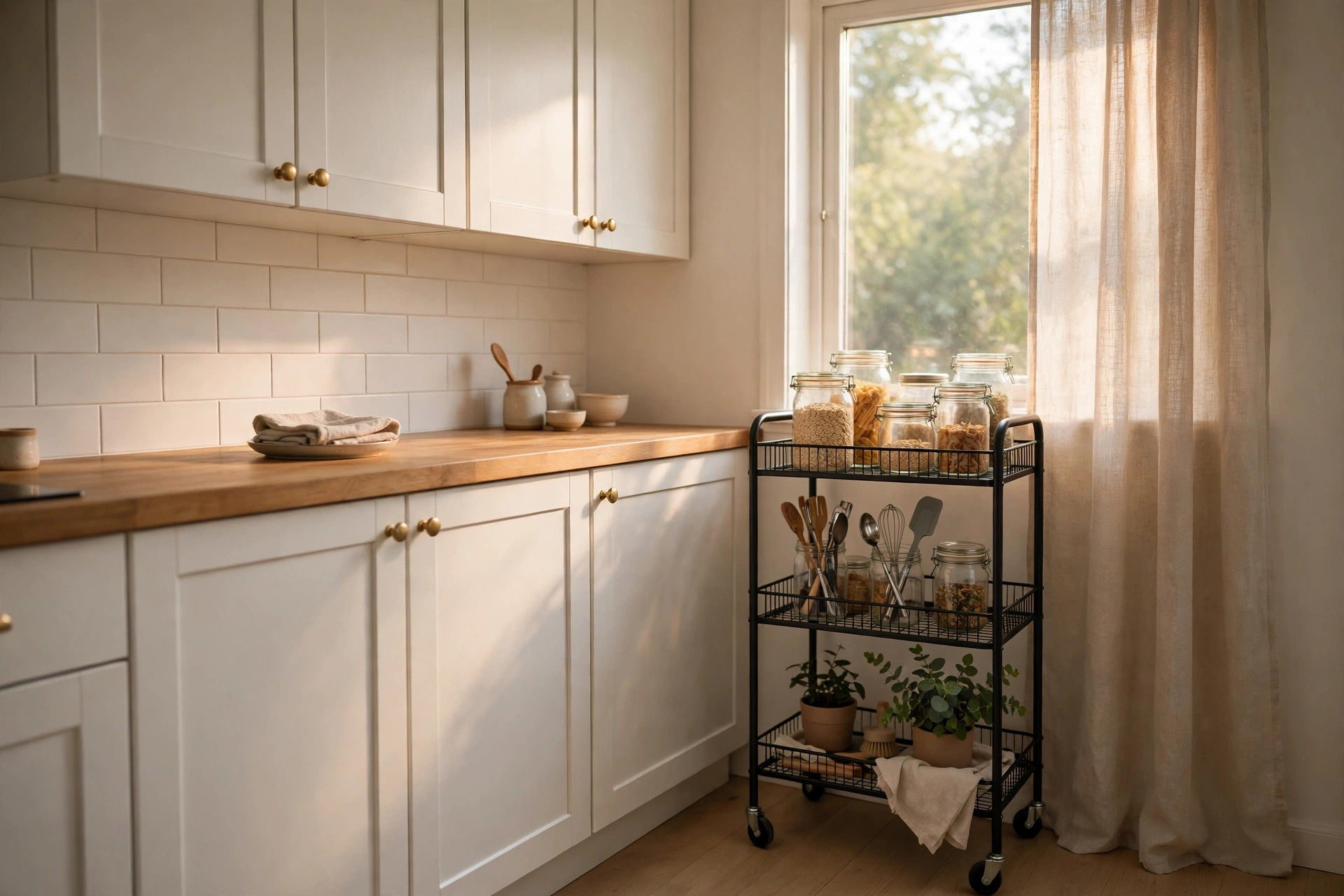
A rolling cart is the tiny kitchen's best friend. It adds three tiers of storage in the footprint of a small stool, it rolls to wherever you are cooking, and it parks in a gap that nothing else fits — beside the fridge, at the end of a counter, in a dead corner. It is also the storage you can buy today and use tonight, with no fitting, no drilling and no landlord approval.
These seven ideas turn one humble cart into a spice station, a baking trolley, a coffee corner and a landing zone for shopping. The rules are simple: heavy things low, daily things at hand height, and a parking spot it returns to every night. Pick the parking spot before the cart arrives, because a cart with a home is storage and a cart without one is furniture in the way.
The 7 Rolling Cart Ideas
1. Give each tier one job
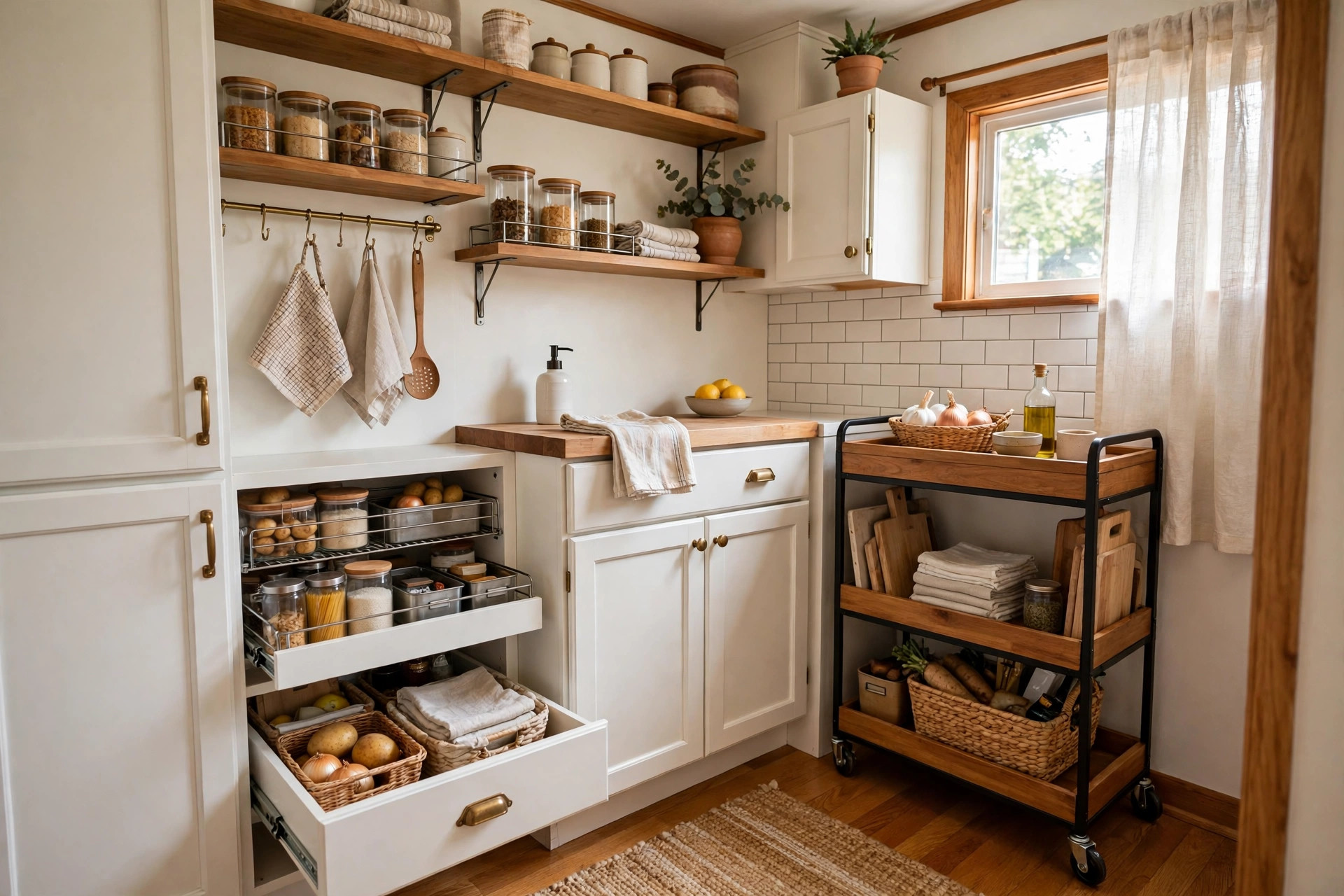
A cart works when each tier has a clear job. Top tier for daily cooking essentials — oils, salt, utensils in a jar. Middle tier for the things you use weekly, like baking tins or a mixing bowl. Bottom tier for heavy or bulky items such as potatoes, onions or the big pan. One job per tier stops the cart becoming a rolling junk drawer, and you can find anything in seconds without digging through layers. If a tier starts collecting random things, empty it completely and reassign its job — five minutes well spent.
2. Make the top tier a spice and oil station
Spices and oils take up precious counter space in a tiny kitchen, and they are exactly what you reach for while cooking. Line them up on the top tier in matching jars, roll the cart beside the hob, and everything is at your elbow. Keep only the spices you use monthly on the cart and store the rest in a cupboard. A small tray under the oils catches drips and keeps the tier looking tidy. Matching jars are not vanity; they let you see levels at a glance and stop duplicate buying.
3. Use it as a baking station that rolls out
Baking needs more counter than a tiny kitchen has. Keep flour, sugar, scales and mixing bowls on the cart, roll it out when you bake, and use its top as extra work surface beside the counter. When the cake is in the oven, everything rolls back to its parking spot and the kitchen is clear again. It is the closest a small kitchen gets to a bakery bench, and it costs almost nothing. A cart with a wooden top doubles as a chopping surface when the counter is full of trays and tins.
4. Park it in the gap beside the fridge
Every tiny kitchen has a useless gap — beside the fridge, at the end of a run of units, next to the cooker. Measure it: most rolling carts are slim enough to slide in and turn dead space into three tiers of storage. This parking spot is what makes the cart work long term, because a cart with a home never becomes an obstacle. If the gap is too narrow, the end of the counter run works just as well. A small hook on the side of the cart holds the tea towel you reach for twenty times a day.
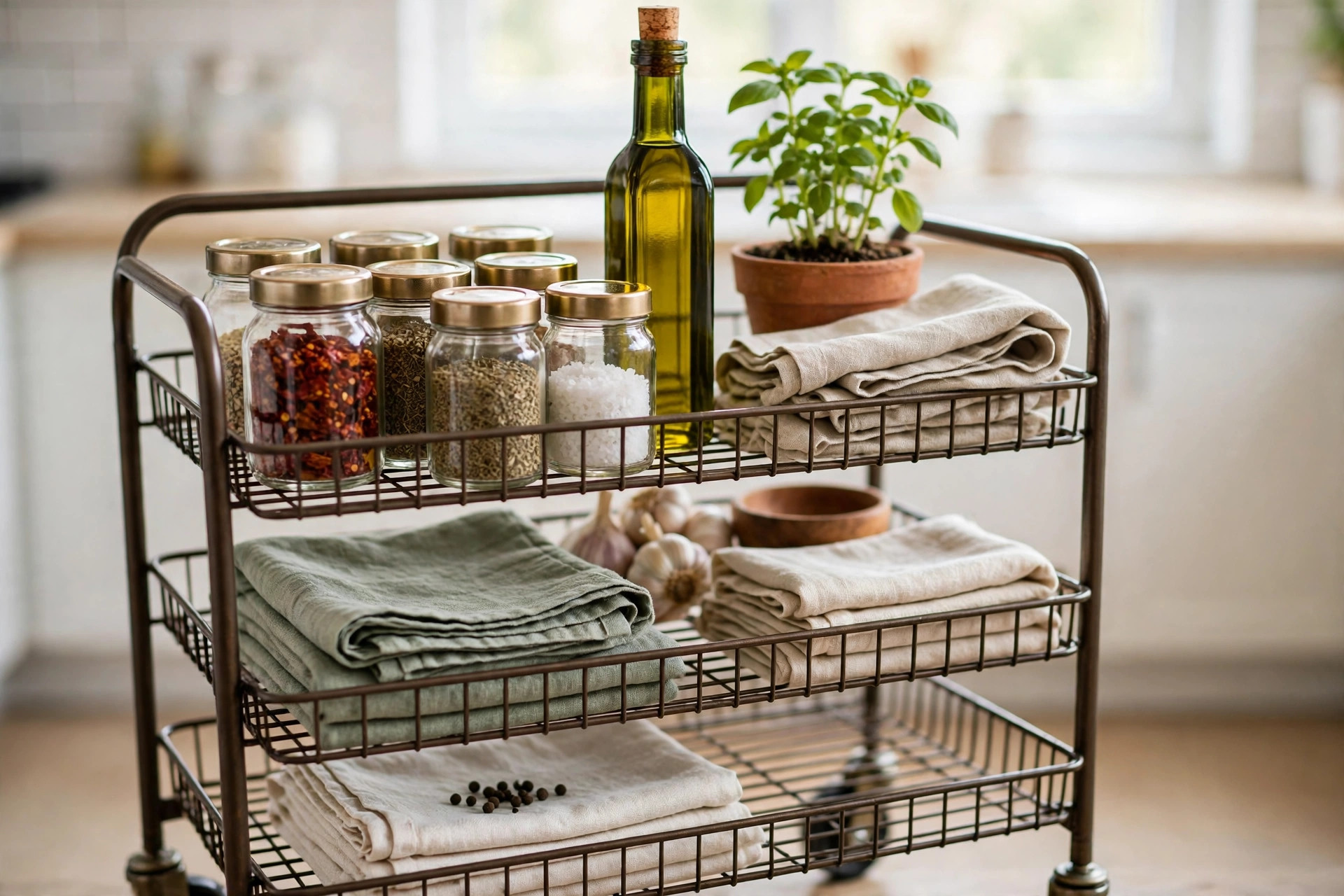
Three tiers on wheels — the storage a tiny kitchen was missing.
5. Turn it into a coffee and breakfast cart
A cart makes a charming coffee station: machine or kettle on top, mugs and coffee on the middle tier, breakfast things below. Roll it to the table on slow mornings, or keep it parked as a permanent corner that frees counter space for cooking. In a tiny kitchen, moving the whole breakfast setup off the counter can be the difference between a workable kitchen and a frustrating one. A small plant on top keeps it pretty. Keep the coffee cart near a socket so the machine never needs to move back to the counter.
6. Keep heavy things low and light things high
A loaded cart should be stable, so heavy items — jars, tins, the cast iron pan — go on the bottom tier, and light things like tea towels and herbs go on top. This keeps the centre of gravity low so the cart rolls smoothly and never feels tippy on corners. It also puts the things you lift most often at a comfortable height. Folded tea towels on the top tier double as a soft landing for hot dishes. Check the wheel castors once in a while; a cart that rolls smoothly is a cart you will actually move.
7. Roll it out of the kitchen when guests come
The hidden superpower of a rolling cart is that it leaves. When friends come for dinner, roll the cart into the hallway or bedroom and your tiny kitchen instantly gains floor space for people. Roll it back afterwards and everything is exactly where it was. No other storage in a small kitchen can do that. Choose a cart with smooth wheels and a handle, and this trick takes ten seconds. Guests can even use the cart as a drinks station in the living room, then it rolls home afterwards.
Shop the look
These are the products pictured in the ideas above. Product names only — no links and no prices yet, so you can find them in stores yourself.
- RÅSKOG utility cart, white
- NISSAFORS trolley, white
- NISSAFORS utility cart, black
- DINERA mug, dark grey
- FÄRGKLAR mug, white
- Wooden tray
- Terracotta plant pot with a green plant
- Glass jar for fairy lights
- VARIERA shelf insert, white
Product names are given to help you find them in stores. Prices and links will be added later, once our shopping links are ready.
Frequently asked questions
What size rolling cart fits a tiny kitchen?
Measure your parking gap first — most kitchen carts are about thirty to forty-five centimetres wide and fit beside a fridge or at the end of a counter. Three tiers is the sweet spot: enough storage to matter, low enough to see the top. Check the wheels lock or at least roll smoothly on your floor.
What should I keep on a kitchen rolling cart?
Daily cooking essentials on top, weekly things in the middle, heavy and bulky items at the bottom. Spices, oils, utensils, baking basics and breakfast things all work well. Avoid storing cleaning chemicals near food, and keep the cart edited — if everything lives on it, nothing is easy to find.
Is a rolling cart better than extra shelves?
They solve different problems. Shelves are permanent and hold more; a cart moves, parks in gaps and can leave the room entirely. In a tiny or rented kitchen, the cart usually wins because it needs no fixings and adapts as your cooking changes. Many small kitchens end up with both.
More to love from Zentro