Home > Bedroom > Winter Bedroom
7 Small Bedroom Winter Bedding Ideas for Warm Sleep
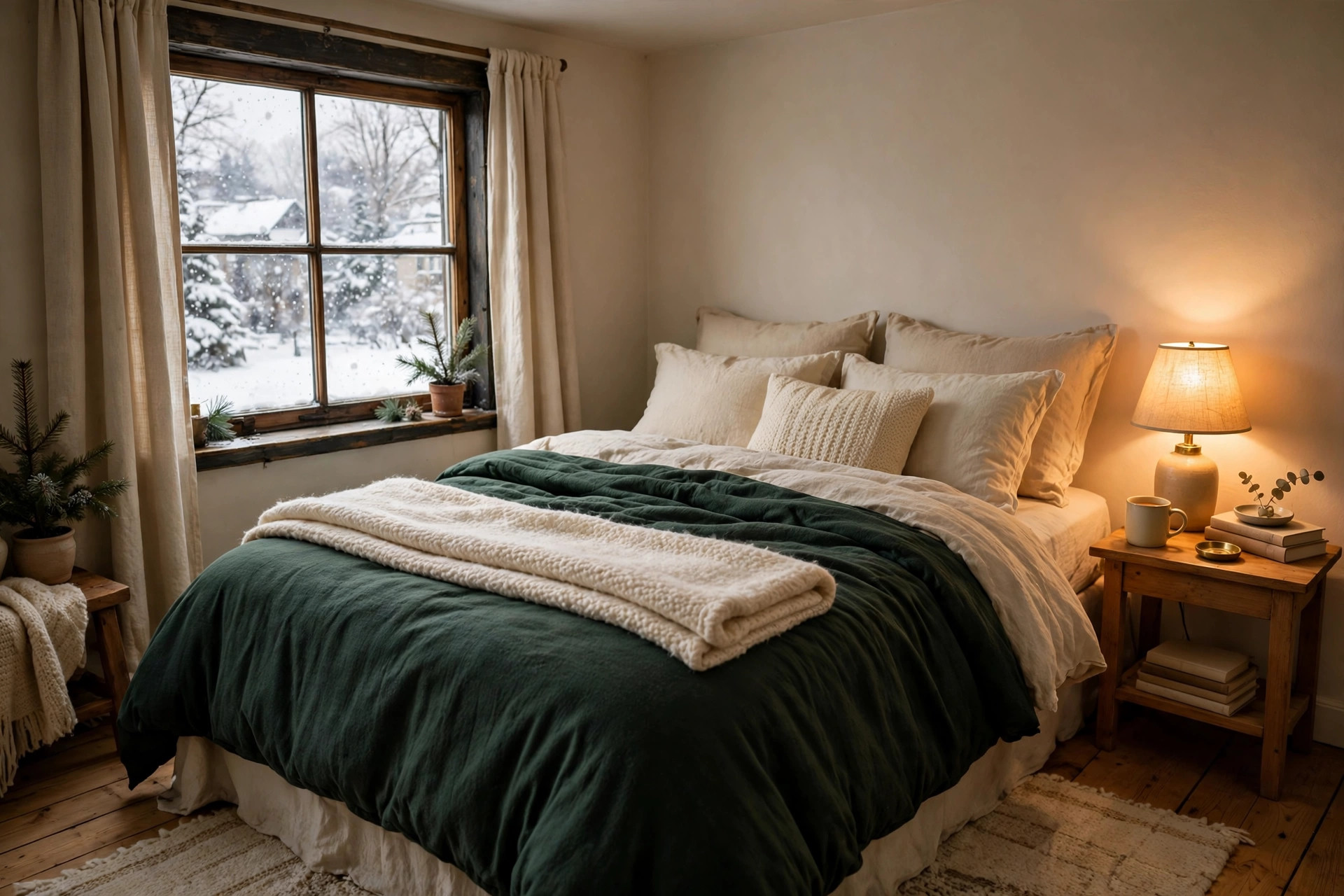
A small bedroom in winter has one job: to be the warmest place in the house at bedtime. But a small room loses heat fast, the bed sits close to a cold wall, and a thin summer duvet is no match for a January night. The answer is not a bigger bedroom or the heating on all night — it is the bedding, layered in the right order.
These seven ideas build a bed that warms you up and keeps you warm until morning. Flannel sheets, the right layering order, a heavier duvet and a throw across the foot all work together, and none of them needs more space than the bed you already have. Sleep warm, and the small bedroom becomes the best room in the house.
The 7 Small Bedroom Winter Bedding Ideas
1. Layer in the right order
Warm bedding works like warm clothes: the order matters more than the amount. Start with a fitted sheet that fits snugly, then a flat sheet, then a light blanket, and finally the duvet on top. Each layer traps a thin pocket of warm air, and together they keep you far warmer than one thick duvet alone. Tuck the layers in at the foot and the sides, but leave the top loose so you can kick a layer off if you get too warm. Getting the order right costs nothing and changes the night completely.
2. Swap cotton for flannel
Crisp cotton sheets feel cold when you first climb in, but flannel feels warm from the first second. Flannel is brushed cotton, soft and slightly fuzzy, and it holds your body heat instead of letting it escape into the mattress. Swap the fitted sheet and the pillowcases first — those are the parts that touch your skin — and keep the flat sheet cotton if you like a cooler top layer. Wash flannel on a gentle cycle and skip the fabric softener, which flattens the fibres that make it warm. If flannel feels too warm, use it only on the fitted sheet and keep a cotton flat sheet on top.
3. Warm the bed before you get in
The coldest minute of a winter night is the first one in bed, so warm the bed before you get there. A hot water bottle tucked under the duvet half an hour before bedtime takes the chill off the sheets, and a heated blanket on a timer does the same job without any effort. Never fall asleep with a heated blanket on high, and always check a hot water bottle for leaks before you use it. A warm bed means you fall asleep in minutes instead of shivering for half an hour.
4. Add a throw across the foot
A throw folded across the foot of the bed is the simplest way to add warmth exactly where you need it. Your feet lose heat fastest, and a folded wool throw over the bottom third of the bed keeps them warm without making the whole bed too hot. Choose a throw that is heavy for its size — wool or a thick fleece — and fold it in half so it is double thickness. In the morning, the throw goes back over the chair, and the bed looks made in seconds.
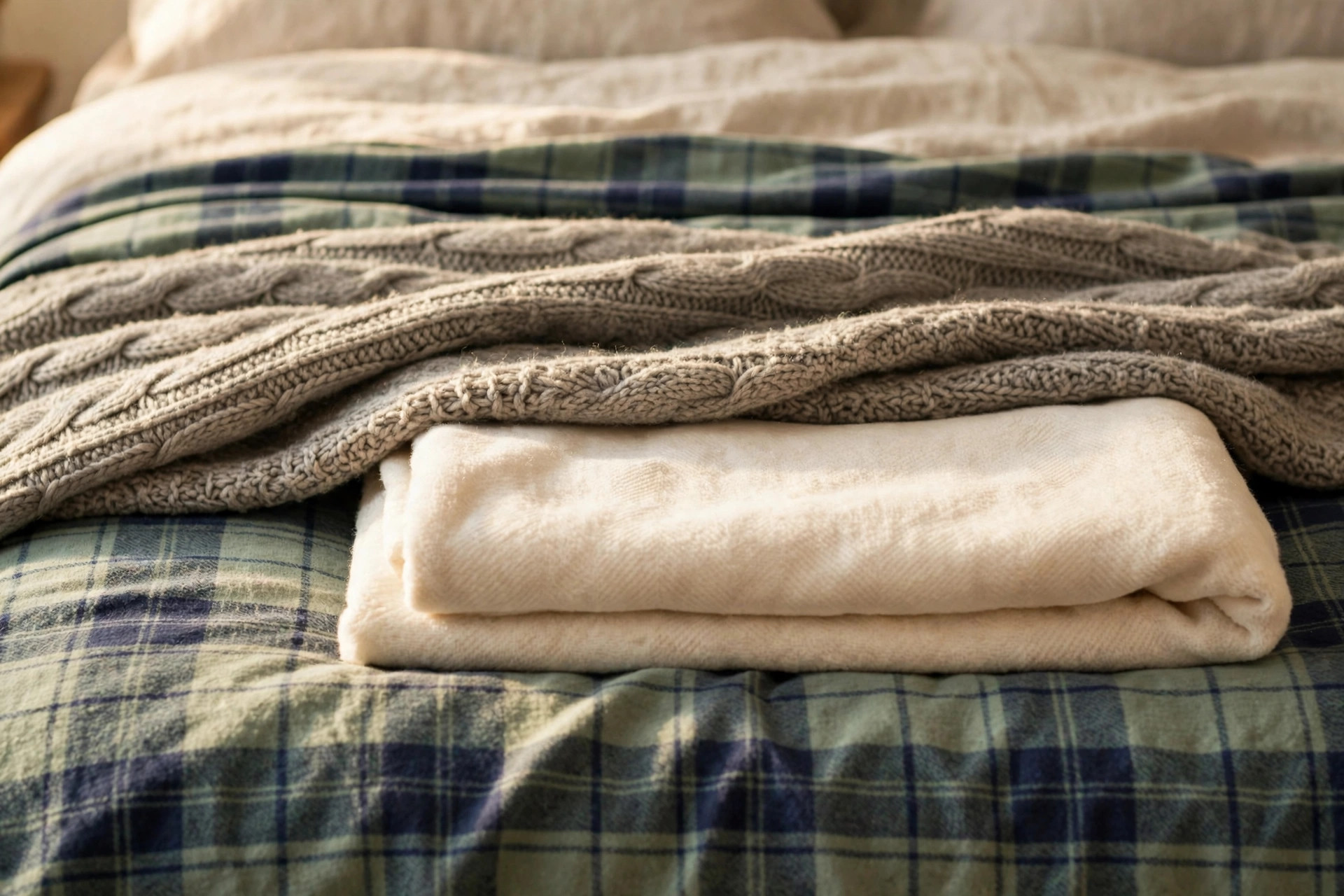
Layer in the right order and the bed does the warming — not the heating.
5. Keep the room cool, the bed warm
It sounds backwards, but the best winter sleep happens in a cool room with a warm bed. A bedroom around sixteen to eighteen degrees, with a window cracked open for fresh air, helps you fall asleep faster and sleep more deeply, while the bedding keeps your body warm. If the room is too hot, you wake up sweating and throw the covers off, then wake up cold an hour later. Warm the bed, not the room — your sleep and your heating bill will both be better for it.
6. Use a heavier duvet, not more blankets
When a bed feels cold, most people pile on more blankets, but a heavier duvet is the better fix. One good winter duvet with a higher tog rating traps heat evenly across the whole bed, while a pile of thin blankets slides around, leaves gaps and ends up on the floor by morning. If you cannot buy a new duvet, layer two lighter ones together — the air trapped between them works like extra insulation. One heavy layer beats three thin ones every time. Check the tog rating on the label when you buy — a winter duvet is usually rated around thirteen tog or higher.
7. Keep a spare within reach
Winter nights change, and the bedding should be able to change with them. Keep a spare blanket folded in a basket beside the bed, or on the chair in the corner, so you can reach it without getting up and losing all your warmth. The same basket holds the spare pillowcase and the hot water bottle, so everything for a cold night is in one place. A spare within reach means a cold snap at three in the morning is a thirty-second fix, not a reason to lie awake.
Shop the look
These are the products pictured in the ideas above. Product names only — no links and no prices yet, so you can find them in stores yourself.
- Warm flannel sheets
- FLÄDERBUSKE duvet cover set, dark green
- Wool throw in warm cream
- Chunky knitted throw in red
- HEMNES bed frame
- Soft fleece throw in cream
- Brushed cotton pillowcases
- Linen cushion covers in warm beige
- Wicker basket, large
Product names are given to help you find them in stores. Prices and links will be added later, once our shopping links are ready.
Frequently asked questions
What is the best bedding for a cold winter bedroom?
Flannel sheets, a winter duvet with a higher tog rating and a wool throw across the foot of the bed. Layer in order — fitted sheet, flat sheet, light blanket, duvet — so each layer traps warm air. A hot water bottle before bedtime takes the chill off the sheets and helps you fall asleep faster.
Should I keep my bedroom warm or cool in winter?
Cool, around sixteen to eighteen degrees, with a warm bed. A cool room helps you fall asleep and sleep deeply, while warm bedding keeps your body at the right temperature. A room that is too hot makes you sweat, throw the covers off, and wake up cold later in the night.
How do I stop my feet getting cold in bed?
Fold a thick wool throw across the foot of the bed, wear warm socks to bed, and use a hot water bottle near your feet for the first hour. Cold feet are the most common reason people wake up in winter, and warming them is often all it takes to sleep through the night.
More to love from Zentro