Home > Small Space > Small Space
7 Small Space Winter Storage Ideas That Hide the Clutter
Winter brings more stuff into a small home than any other season. Heavy coats, thick boots, scarves, gloves, extra blankets and the Christmas boxes all arrive at once, and in a small space there is nowhere for them to hide. The result is a hallway you trip over and rooms that feel smaller every week.
These seven ideas hide the winter clutter instead of fighting it. The trick is a proper swap at the start of the season, then one hidden home for each kind of winter thing — boots, coats, throws and all. Nothing here needs a bigger flat or a new wardrobe, just a few boxes, hooks and ten honest minutes a day.
The 7 Small Space Winter Storage Ideas
1. Do the winter swap in one afternoon
The single best storage move in a small home is the seasonal swap, done once and done properly. Take every summer item — light jackets, sandals, thin throws — out of the hallway, the hooks and the easy shelves, and pack it into labelled boxes on top of the wardrobe or under the bed. Then bring the winter things into those freed spots. One in, one out is the rule: if a new winter coat arrives, an old one leaves. A swap afternoon feels like work, but it buys you three months of calm. Do it on a dry Saturday, put on a podcast, and the whole swap is done before lunch.
2. Hide boots behind the door, not beside it
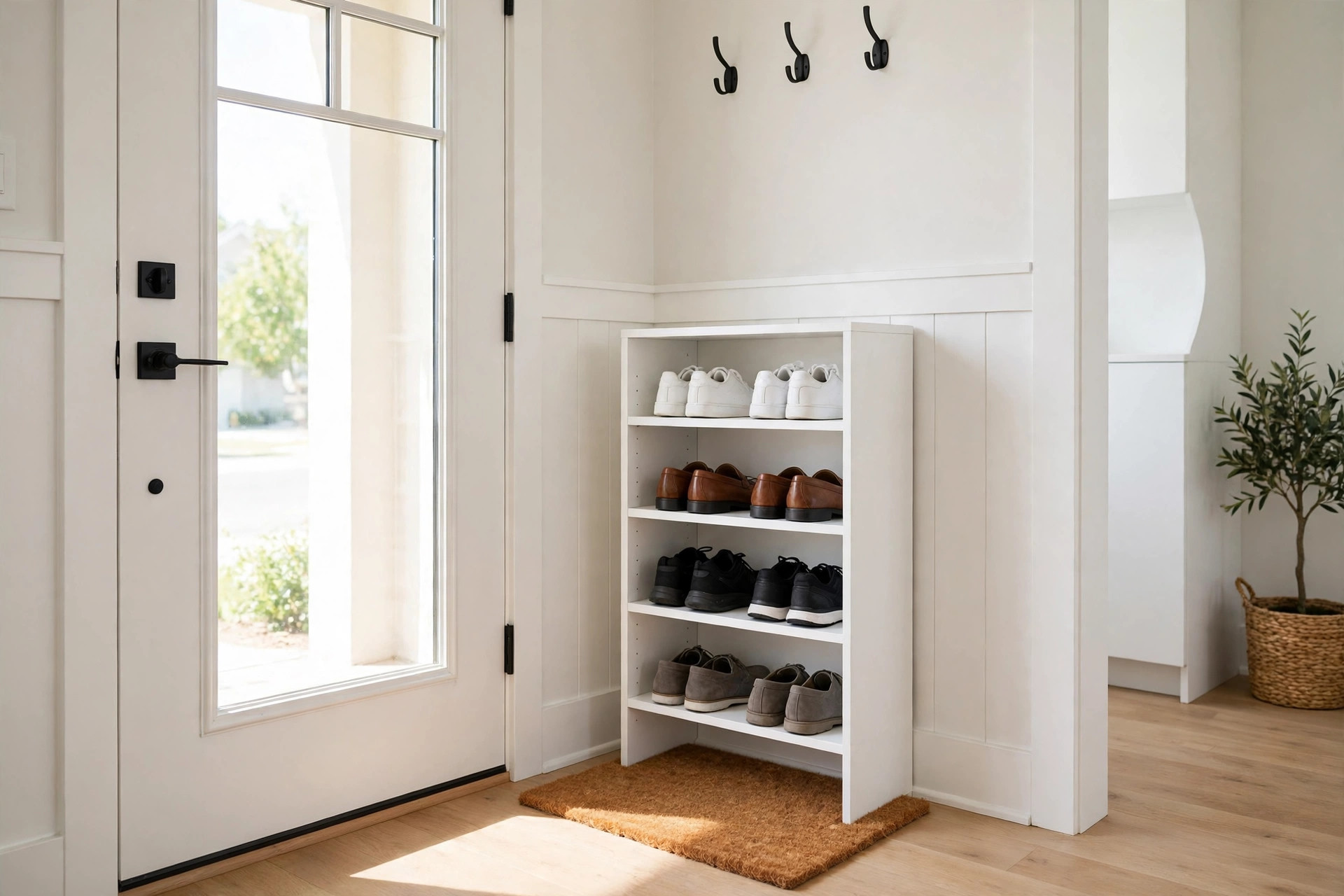
Boots are the biggest winter clutter in a small hallway, and a row of them by the door eats the whole floor. Move them behind the door instead: a slim boot tray tucked against the wall, a narrow rack on the back of the door, or one tall basket that holds two pairs upright. Keep only the pair you wear daily within reach, and store the rest higher up or in a cupboard. Wet boots go on the tray to dry, then back into their spot — the floor stays clear and nobody trips.
3. Turn the bed into a winter cupboard
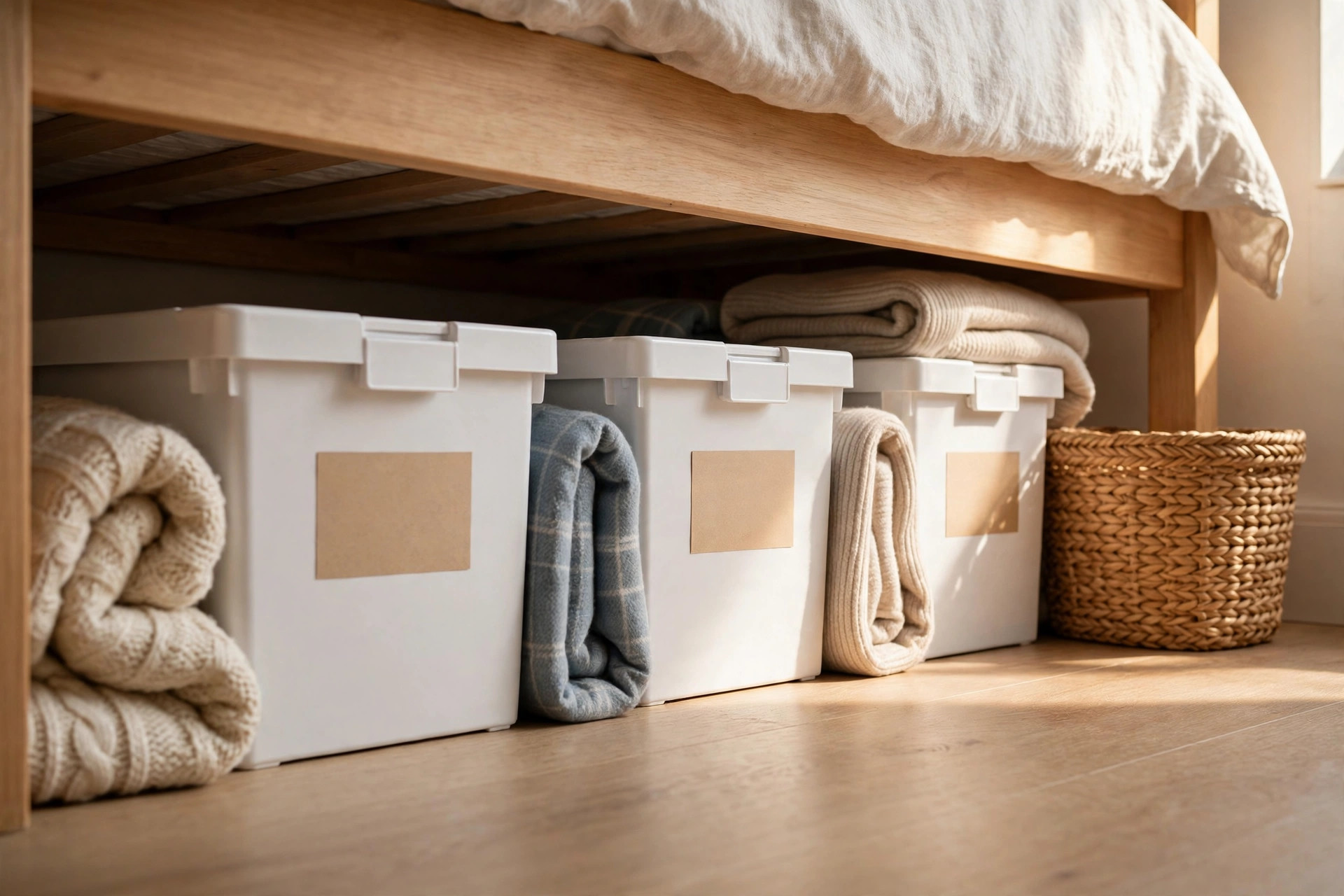
The space under the bed is the largest hidden cupboard in a small home, and winter is when it earns its keep. Flat boxes with lids hold out-of-season clothes, spare blankets and the Christmas decorations, while vacuum bags shrink bulky duvets and coats to half their size. Label each box on the short end you can see, so you never have to pull them all out to find one thing. Keep the everyday items at the front and the once-a-year things at the back.
4. Give every coat a hook at its own height
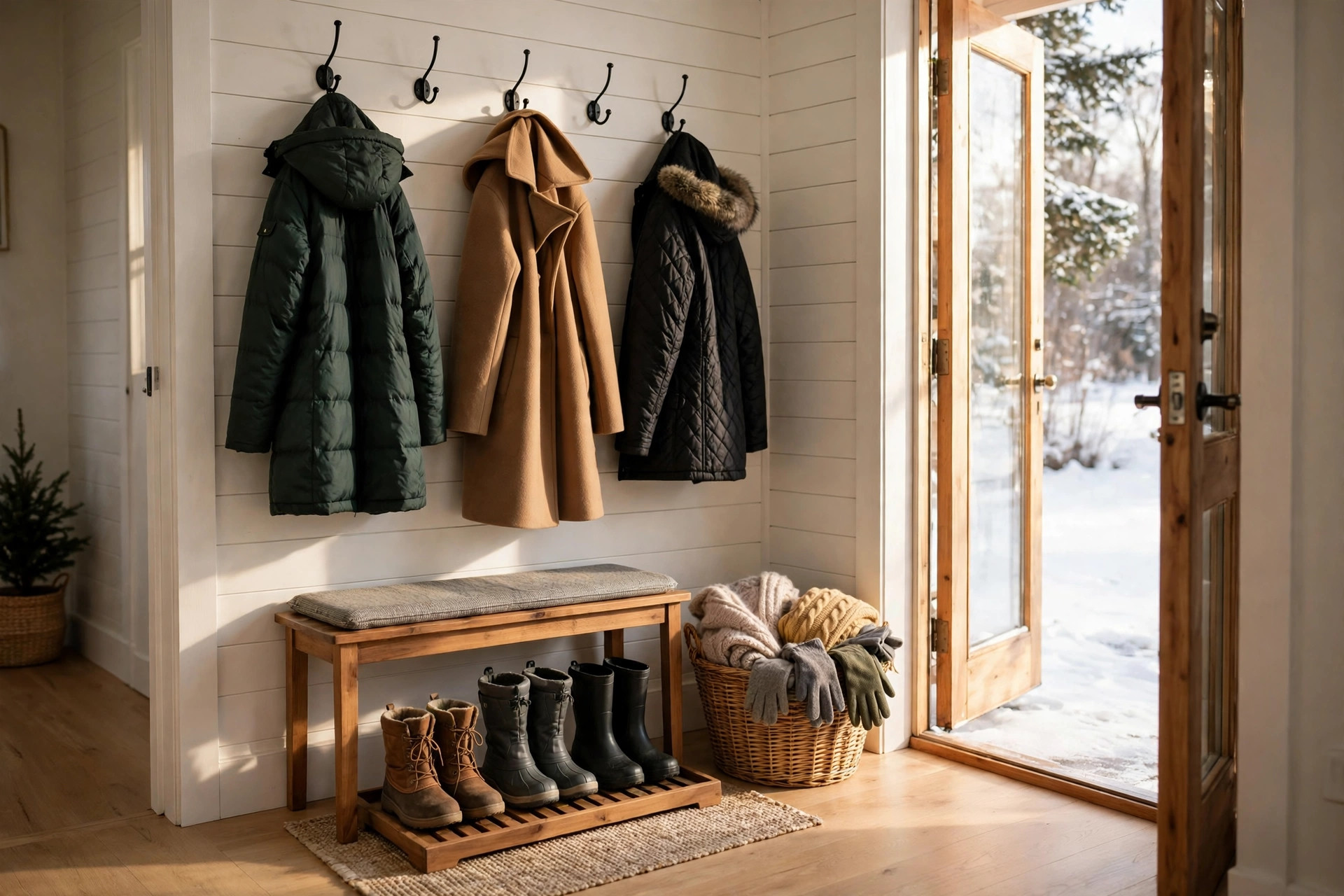
A single row of hooks at one height means coats pile on top of each other and half of them slide off. Instead, put two rows: adult coats high, and a lower row for children, scarves and the coat you grab daily. Add one small hook beside the door for keys and the dog lead, so they never end up on a chair. Four strong hooks beat a wobbly coat stand that takes up floor space, and a hook per person ends the daily argument about whose coat is whose.
Everything winter has a home — that is why the room still feels calm.
5. Use the top of the wardrobe
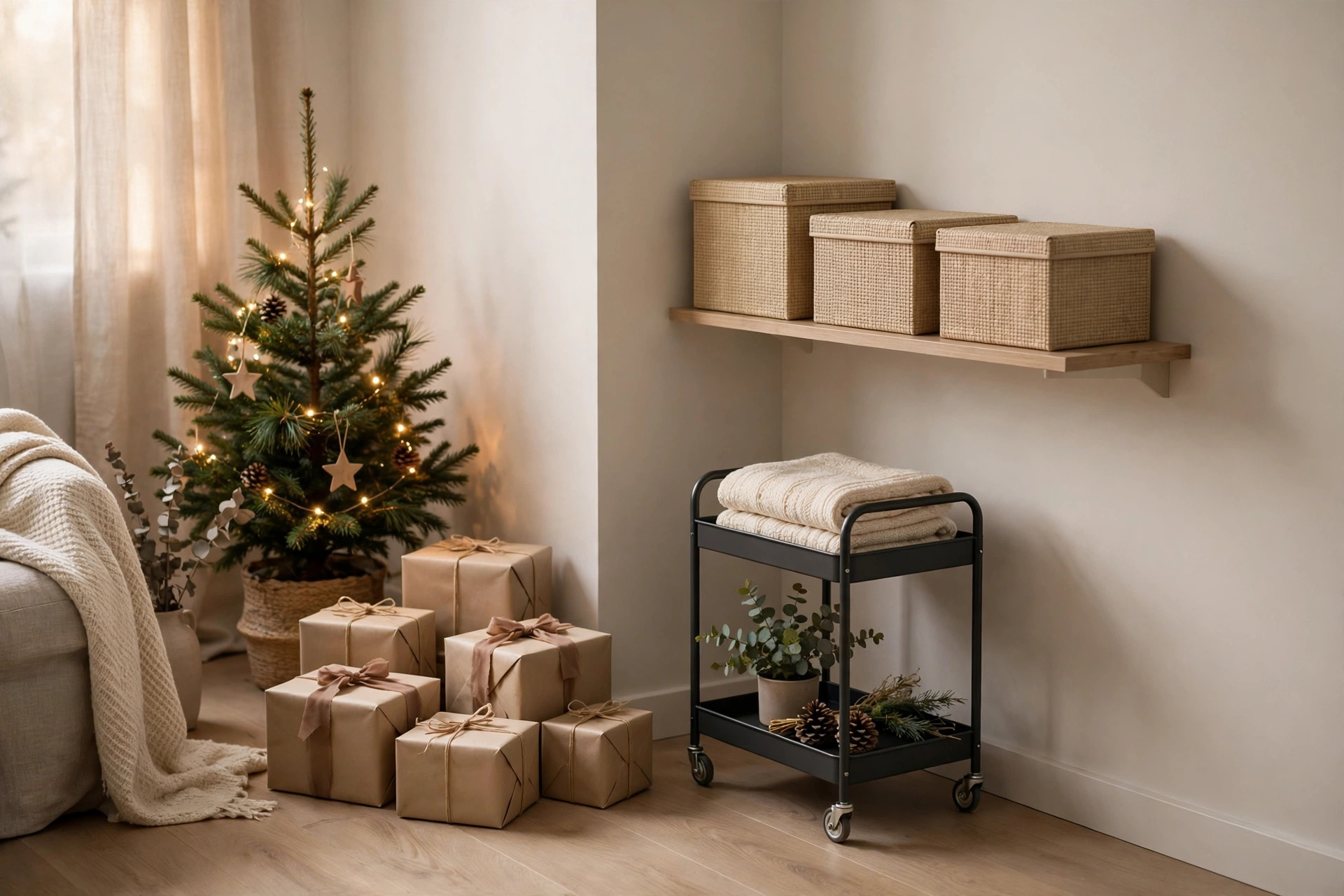
The top of the wardrobe is wasted space in most small homes, yet it holds a surprising amount. Matching boxes with lids, all the same size, look tidy up there and keep dust off winter spares, spare bedding and the decorations you only need once a year. Put a small step stool nearby so reaching them is easy, and label the boxes clearly on the front. The rule is simple: if you need it more than once a month, it does not live on top of the wardrobe.
6. Make the ottoman earn its place
In a small home, every seat should store something, and an ottoman is the easiest win. A storage ottoman by the sofa holds the winter throws, the spare cushions and the board games, so the living room can be tidied in thirty seconds when guests arrive. Choose one with a lid that lifts off fully, so you can see everything inside, and keep the heaviest items at the bottom. It is a footrest, a spare seat and a cupboard in one — three jobs for the space of one.
7. Keep a daily basket by the door
Most winter clutter is not storage at all, it is the small daily pile: gloves, scarves, hats and the things you drop when you come in. One basket by the door catches all of it, and the habit that makes it work is emptying it each night — gloves back in their box, scarves on their hook. A basket with handles can be carried to the bedroom for a proper sort once a week. When everything small has one landing spot, the hallway stops looking like a lost property box.
Shop the look
These are the products pictured in the ideas above. Product names only — no links and no prices yet, so you can find them in stores yourself.
- SKUBB storage box, set of 6, white
- SKUBB shoe organiser, dark grey
- SAMLA box with lid, transparent
- TRAMPA doormat
- KALLAX shelf unit, white
- Wicker basket, large
- Rattan basket for throws
- Brass hooks, small
- Wool throw in warm cream
Product names are given to help you find them in stores. Prices and links will be added later, once our shopping links are ready.
Frequently asked questions
Where should I store summer clothes during winter?
In labelled boxes on top of the wardrobe or flat under the bed, where they are out of the way but easy to find. Wash everything first, fold it flat, and add a note on the box so you know what is inside. Vacuum bags help for bulky items, but keep one light jacket out for a surprise warm day.
How do I stop the hallway filling up with coats?
Give each person one hook and enforce it — one coat per hook, and anything extra lives in a cupboard. A lower row of hooks for children and daily scarves helps a lot, and a basket for hats and gloves keeps the small things off the floor. A quick nightly reset of five minutes is what keeps it working.
What is the best storage for winter boots in a small flat?
A slim boot tray by the door for the pair in use, and the rest stored upright in a tall basket or on a narrow rack behind the door. Wet boots should dry on the tray first, then go back to their spot. Keeping only one pair per person within reach is the rule that stops the pile from growing.
More to love from Zentro