Home > Bedroom > Winter Bedroom
7 Winter Bedroom Curtain Ideas for Warm Sleep
Curtains do more in winter than dress a window. They are the blanket your bedroom wears at night, holding warmth in and keeping cold draughts out. The right curtains can make a room feel several degrees warmer, and they soften the dark evenings in a way no other change can match.
These seven ideas use curtains by time of day, by layer and by colour. You do not need new windows or a big budget, just the right fabric, the right length and a little care with how they hang. Start with the layer that matters most, then add the rest through the season. Start with the layer that matters most for your room, then add the rest as the cold weather settles in.
The 7 Winter Bedroom Curtain Ideas
1. Add thermal lining to what you own
Thermal lining is the cheapest way to make ordinary curtains work harder in winter. It is a plain backing layer that blocks draughts, holds warmth in and keeps early morning light out, so you sleep longer. You can buy ready-made thermal curtains or sew a lining onto a pair you already love. Hang them so the lining faces the glass, and check that the edges sit close to the wall, because gaps let cold air slip straight past. Close them an hour before bedtime, so the room has time to hold its warmth before you climb under the covers.
2. Layer sheers with heavy curtains
Two layers give you a curtain for every hour of the day. Sheer voile softens daylight and keeps privacy while the sun is up, then heavy curtains close over them at dusk for warmth and darkness. Hang the sheer on a slim rod close to the glass and the heavy pair on a rod further out, so both slide freely. This pairing looks generous and layered, and it means you never have to choose between light and warmth. Wash the sheers in autumn, because clean voile lets in far more of the weak winter daylight than dusty fabric does.
3. Hang them high and let them reach the floor
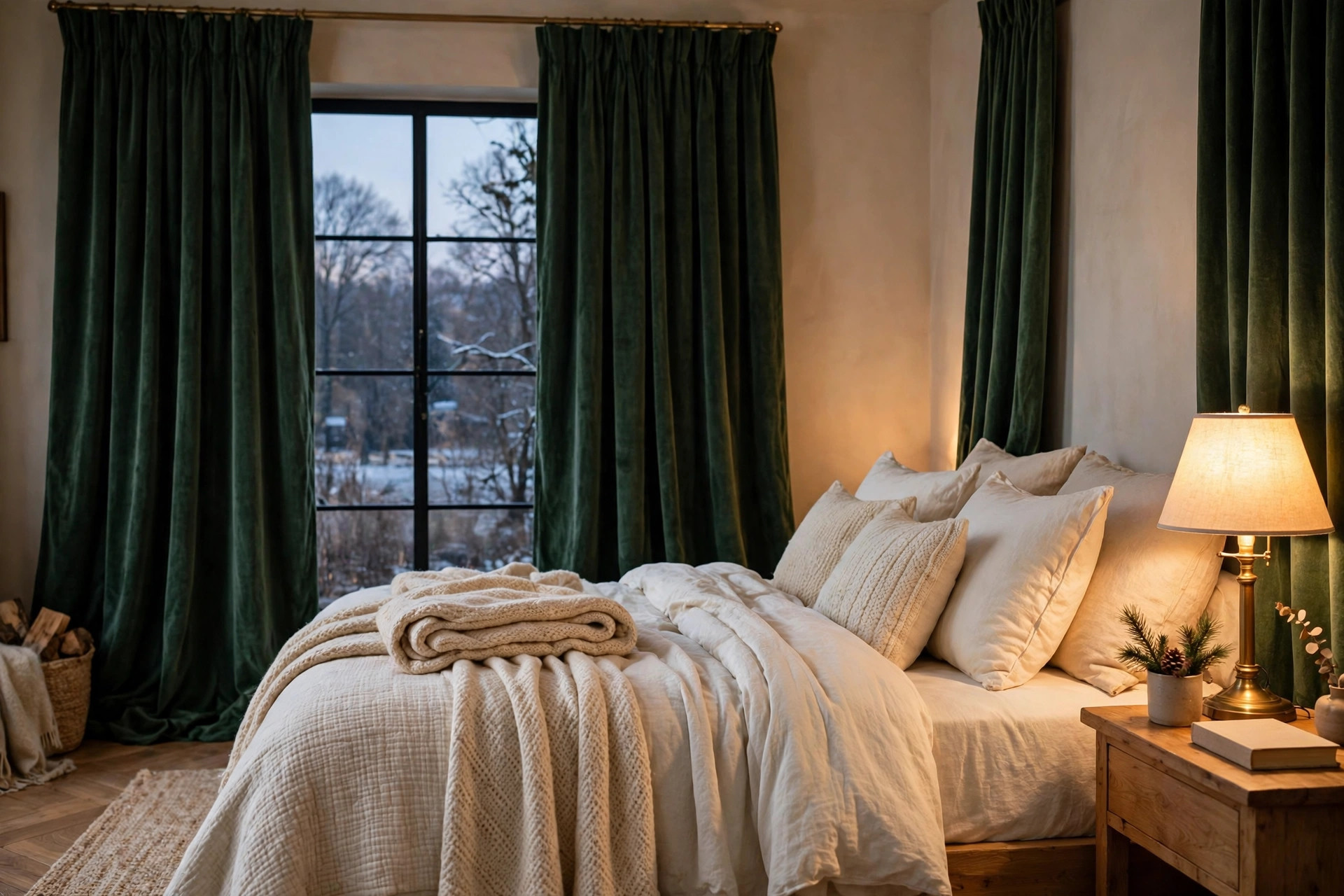
Curtains hung close to the ceiling and falling to the floor make a bedroom feel taller and warmer at once. The long drop covers the coldest part of the wall, the area around the window frame, and stops draughts pooling at the bottom. Let the hem just touch the floor or puddle very slightly, no more than a couple of centimetres. Short curtains that stop at the sill leave the coldest air free to drift into the room. A pelmet or a simple fabric valance above the rod stops warm air escaping over the top of the curtains.
4. Choose warm, deep colours
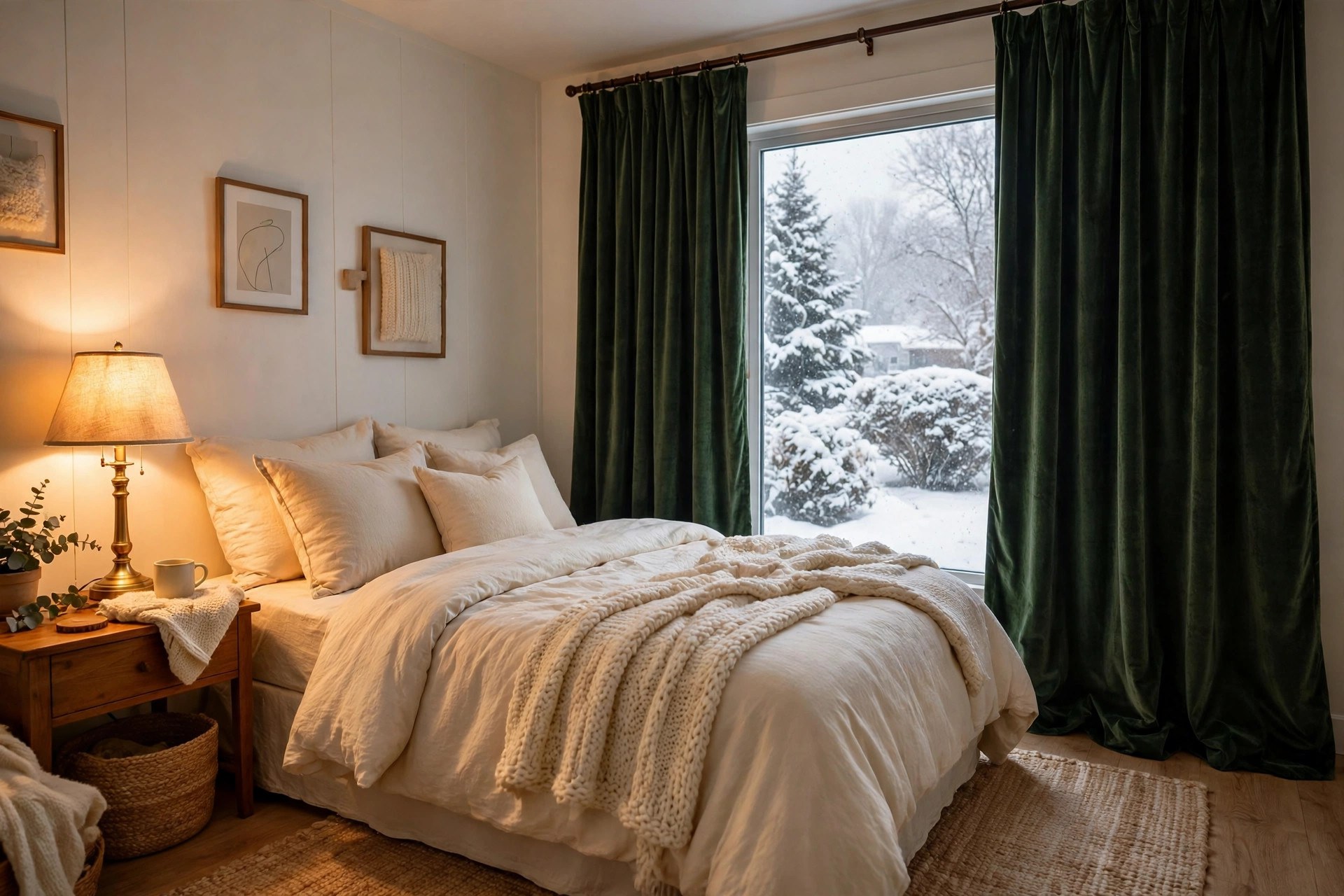
Colour changes how warm a room feels, even when the temperature is the same. Deep green, terracotta, warm rust and dark mustard all make a bedroom feel cosier than pale grey or cool blue. If the room is small, keep the walls light and let the curtains carry the deep colour, so the room stays bright by day and snug by night. A warm colour also flatters lamplight, which is the light you live in most in winter. If the whole room in a deep colour feels too much, use it on one window only and keep the other pair neutral.

Heavy curtains, hung high and puddling slightly, are the warmest layer in a winter bedroom.
5. Use tiebacks to shape the day
Tiebacks turn heavy curtains into a daytime feature instead of a closed wall. Pull the curtains back in a soft curve each morning with fabric tiebacks in a warm gold or matching tone, and let the full length fall again at dusk. Tie them at about two-thirds of the height for a graceful sweep that still shows the window. This simple habit also stops the fabric from creasing flat and keeps the room feeling open while the light lasts. Tie the curtains back loosely, never pulled tight, so the fabric keeps its soft folds and the window still feels dressed.
6. Pick blackout for deeper sleep
Winter nights are long, but streetlights and early dawn still disturb sleep. A blackout lining or a blackout curtain layer shuts out that light completely, and it adds another layer of insulation at the same time. Choose a pair that closes fully in the middle with no gap, and add a simple pelmet or a valance above the rod to block the light leaking over the top. Better darkness is the quickest route to better winter sleep. A draught excluder along the bottom of the window frame works with the curtains to seal the coldest gap of all.
7. Keep the fabric washable and fresh
Heavy winter curtains collect dust, so plan for cleaning before the season starts. Choose a machine-washable fabric where you can, and wash or steam the curtains once before winter and once after. A quick shake outside on a dry day lifts dust between washes. Clean curtains smell fresh, hang better and keep the bedroom feeling healthy, which matters when the windows stay shut for months. Air the room briefly before washing day, so the curtains go back up into a fresh room rather than a stuffy one.
Shop the look
These are the products pictured in the ideas above. Product names only — no links and no prices yet, so you can find them in stores yourself.
- Heavy velvet curtains in deep green
- Warm terracotta curtains
- Sheer voile curtains
- Thermal curtain lining
- Fabric tiebacks in warm gold
- Warm white fairy lights
- Fleece blanket in cream
- Brass bedside lamp
- SANELA cushion cover, dark green
Product names are given to help you find them in stores. Prices and links will be added later, once our shopping links are ready.
Frequently asked questions
Do thermal curtains really keep a bedroom warmer?
Yes, when they fit well. A thermal lining blocks draughts and slows heat escaping through the glass, so the room holds its warmth overnight. The fit matters most: curtains should reach the floor, close fully in the middle and sit close to the wall, or cold air slips around them.
Should winter bedroom curtains be floor length?
Floor length is best for warmth, because it covers the coldest part of the wall around the window. A hem that just touches the floor or puddles slightly blocks draughts at the bottom. Sill-length curtains look neat but leave the lower wall exposed, which is where cold air collects.
What colour curtains feel warmest in winter?
Deep, warm colours such as terracotta, dark green, rust and warm mustard feel cosiest, especially under lamplight. Cool greys and blues can make a winter room feel colder. If you love pale colours, add warmth through the lining, the tiebacks or a warm throw on the bed instead.
More to love from Zentro