Home > Bedroom > Winter Bedroom
Winter Bedroom Rug Ideas for a Warm, Cosy Room

On a cold morning, the first thing your feet meet decides how the day begins. A warm rug beside the bed turns a chilly floor into a soft landing, and it quietly makes the whole bedroom feel warmer, calmer and more finished. Few winter changes work this hard for so little effort. A good rug also softens sound, which makes a winter bedroom feel quieter and more private on long evenings.
These seven ideas help you choose, place and layer bedroom rugs for winter. Size, texture and colour matter more than price. Whether you add one generous rug under the bed or two small runners at each side, the goal is the same: warm feet and a room that invites you to slow down. Start with the bedside landing zone if the budget is small, and add the larger pieces as the season goes on.
The 7 Winter Bedroom Rug Ideas
1. Choose a rug big enough to land on
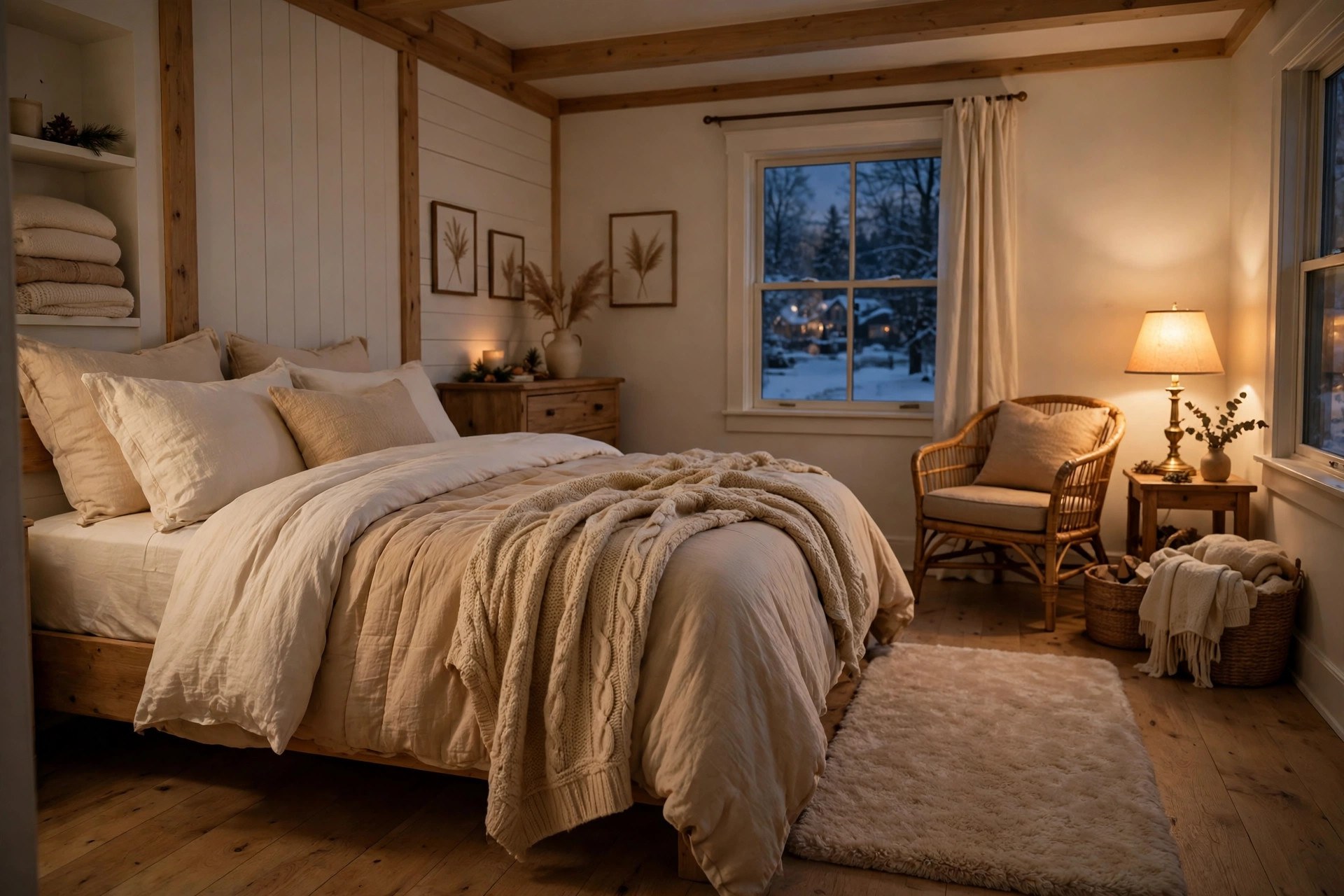
Size is the most common rug mistake. In a bedroom, the rug should extend at least a good step beyond each side of the bed, so your feet land on softness wherever you get up. A rug that is too small looks lost and leaves cold floor exactly where you need warmth. If a large rug is not possible, two matching runners, one at each side of the bed, give the same warm landing for less. If the bed sits against a wall, the rug only needs to extend on the open sides where feet actually land.
2. Pick a thick, soft pile for winter
Winter is the season for pile. A thick wool, wool-blend or high-pile rug traps warmth and feels generous under bare feet. Flatweave rugs look smart in summer but can feel thin and cold in January. If you love a flat rug, layer a smaller thick rug or a sheepskin-style rug beside the bed for the coldest months. Texture you can feel is what makes a bedroom read as cosy rather than merely tidy. Test the pile with bare feet in the shop if you can; comfort is the whole point of this purchase.
3. Layer rugs for warmth and interest
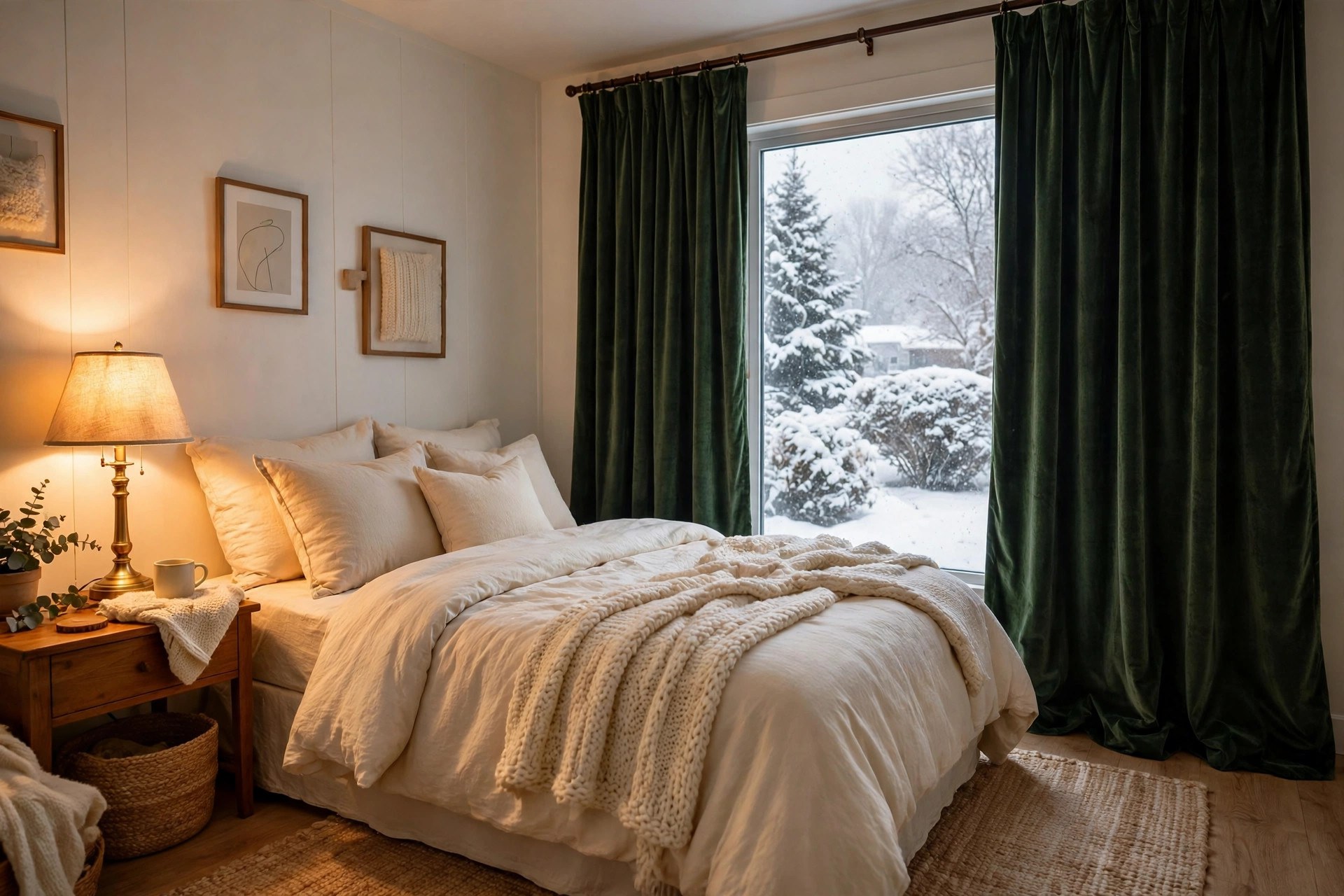
Layering is a kind, budget-friendly trick. Place a large plain rug under the bed, then layer a smaller patterned or textured rug on top at the side where you get up. The layers add warmth, protect the floor, and let you change the look with the smaller, cheaper rug. Keep the palette close — creams, warm greys, soft browns — so the layers feel calm rather than busy in a room meant for rest. A washable smaller rug on top is a practical choice where morning tea sometimes travels.
4. Use warm colours to change the mood
Colour changes how warm a room feels. Cream, warm beige, soft terracotta, deep red and warm grey all make a winter bedroom feel cosier, especially on wooden floors. A patterned rug with warm tones can carry the whole colour scheme of the room, letting bedding stay simple and calm. If your walls and bedding are pale, a warm rug grounds the room and stops it feeling stark on grey days. Warm colour also hides everyday dust between cleans better than very pale, cool tones.

Warmth starts underfoot — a soft rug changes the whole room.
5. Place runners where feet actually go
Think about your real path through the room: from bed to door, bed to bathroom, bed to the chair where you dress. Runners along those routes give warmth exactly where it is needed and can cost far less than one huge rug. A runner at the foot of the bed also softens the view from the door. Make sure runners lie flat and use a rug pad underneath so they never slide on smooth floors. Keep runners away from door swings, or choose a low pile so doors still open freely.
6. Add a rug pad for comfort and safety
A good rug pad is invisible but essential. It adds cushioning underfoot, stops the rug creeping, protects wooden floors, and adds a thin layer of insulation against cold boards. In winter that extra softness is noticeable every single morning. Choose a pad slightly smaller than the rug so it never peeks out, and trim it to fit runners exactly. It also extends the life of the rug itself. A pad also stops the rug edges curling, which keeps the room safer for night-time trips.
7. Care for the rug so it stays inviting
A winter rug works hard, so a little care keeps it lovely. Shake small rugs outside weekly, vacuum larger ones slowly so the pile lifts, and rotate the rug every few months so wear stays even. Blot spills quickly rather than rubbing, and let the rug dry fully before putting furniture back. A clean, plump rug beside the bed is a small daily luxury that makes winter mornings kinder. Store the summer flatweave rolled, not folded, so it comes back smooth when the weather turns.
Shop the look
These are the products pictured in the ideas above. Product names only — no links and no prices yet, so you can find them in stores yourself.
- Soft wool rug in warm cream
- Large warm-toned area rug
- Pale cream area rug
- Soft warm-toned rug for the reading corner
- Chunky knitted throw
- Wool throw in warm cream
- Natural linen bedding in oatmeal
- Bedside lamps with fabric shades
- Large plain area rug
Product names are given to help you find them in stores. Prices and links will be added later, once our shopping links are ready.
Frequently asked questions
What size rug should go under a bed?
Aim for a rug that extends at least sixty centimetres beyond each side and the foot of the bed, so your feet land on it when you get up. For a double bed that usually means a large rug, or two runners at the sides plus one at the foot if a single large rug is not possible. In a small room, a rug that disappears under the bed can still give a generous landing on both sides.
What is the warmest rug material for a bedroom?
Wool and wool-blend rugs are naturally warm, resilient and comfortable underfoot, and they regulate temperature well. Thick synthetic high-pile rugs can also feel warm and are often easier to clean. Whatever the material, a thick pile with a rug pad underneath will feel warmest on cold floors. Wool also resists flattening, so the warm landing lasts for many winters rather than one.
Can I layer rugs in a small bedroom?
Yes — layering suits small rooms well. A large plain rug makes the room feel bigger, and a smaller textured rug beside the bed adds warmth where you need it. Keep colours close in tone and make sure both rugs lie flat with pads underneath so nothing rucks up or slides. Use the same pad under both layers where they overlap so the surface stays level.
More to love from Zentro