Home > Small Space > Winter Hallway
7 Winter Hallway Ideas That Feel Cosy
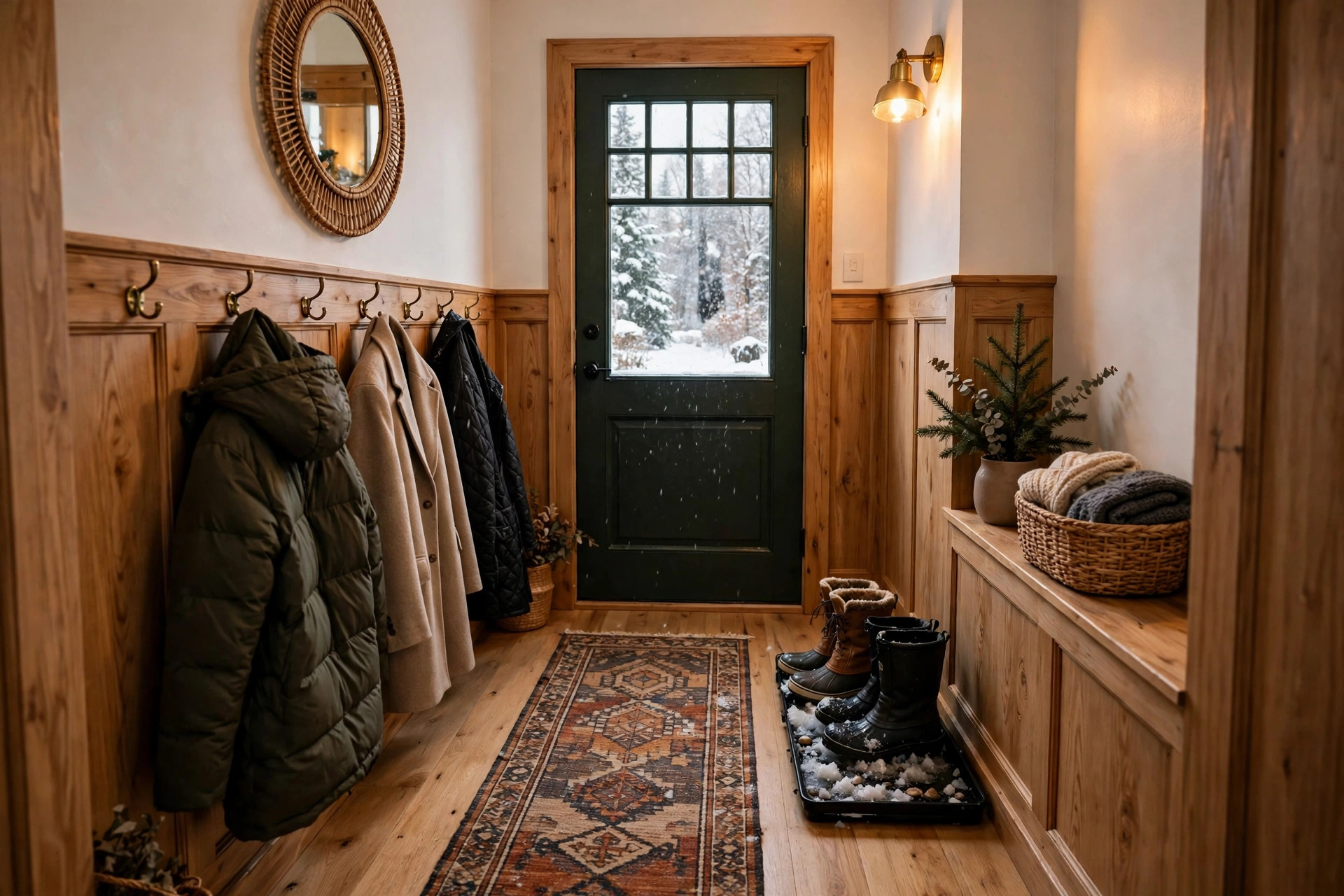
The hallway is the first room you meet when you come home, and in winter it is usually the coldest. Draughts slip under the front door, wet boots pile up by the mat, and the bare floor feels like ice under your feet. It is no wonder most hallways are rushed through, not enjoyed — but a few small changes can make yours feel like a proper welcome.
These seven ideas treat the hallway as a warm airlock between the cold outside and the warm house. Block the draught, light the first step in, give boots and coats a proper home, and warm the floor underfoot. None of it needs much space, and all of it pays off every single time you walk through the door.
The 7 Winter Hallway Ideas
1. Treat the hallway as a warm airlock
The front door is where most of the cold gets in, so treat the hallway as an airlock that stops it travelling further. A draught excluder along the bottom of the door, a heavy curtain hung just inside it, and a door brush seal together cut the cold draught by a surprising amount. Close the door to the rest of the house when you come in, and the hallway holds the cold while the living room stays warm. A warm airlock is invisible when it works — you just notice the house feels warmer.
2. Light the first step in
Coming home to a dark hallway feels cold even when the heating is on, so light the first step in. A small warm lamp on the console, a wall light by the door, or a motion sensor light that switches on as you open the door all make the hallway feel welcoming. Choose warm white light, not cool white, and keep the light low — at eye level or below — so it feels like lamplight rather than a corridor. A lit hallway is the difference between arriving home and just coming inside.
3. Give boots a tray, not the floor
Wet boots on a bare hallway floor are a slipping hazard and a mess, and they make the whole space feel like a boot room. A boot tray by the door catches the water, keeps the floor dry, and gives every pair a proper place to live. Choose a tray with a raised edge and a ribbed base so the water drains away from the soles, and put it where you naturally step out of your boots. One tray, used every day, keeps the hallway floor clear and dry all winter.
4. Hang hooks at grabbing height
Coats end up on chairs and banisters because the hooks are in the wrong place, so hang them where your hand naturally reaches. A row of strong hooks at shoulder height by the door, with one lower hook for children and one for the coat you grab daily, ends the daily pile. Add a small hook for keys and the dog lead beside the door, and a shelf above for hats and gloves. Four good hooks, used every day, beat a coat stand that wobbles and takes up floor space.
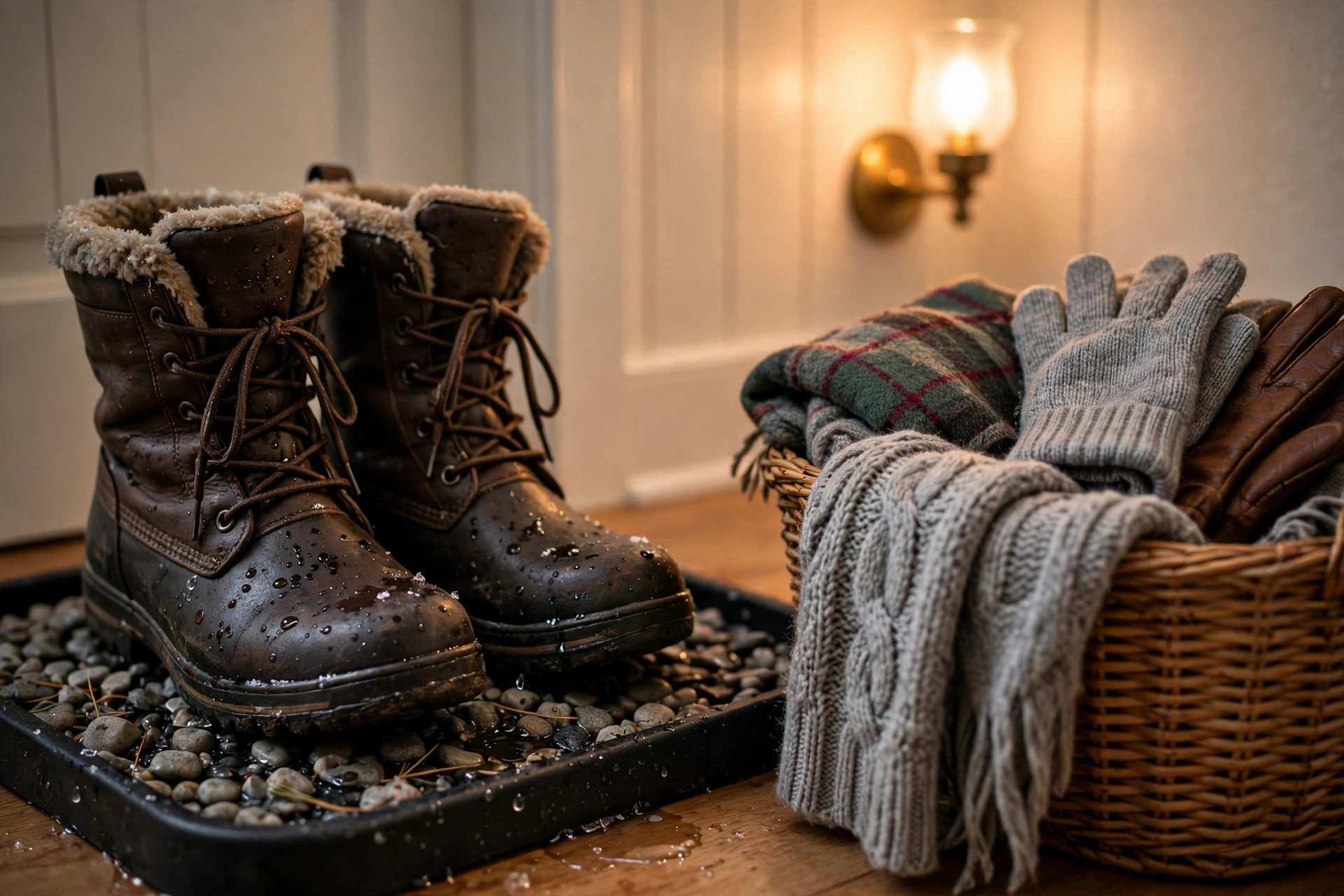
Warm light at the door and everything in its place — the hallway greets you, not the cold.
5. Add a runner that warms the floor
A bare hallway floor is cold underfoot and noisy under boots, and a runner fixes both. A long, low rug down the centre of the hallway warms the floor, softens the sound of footsteps, and makes the narrow space feel like a proper room. Choose a flat weave or a short pile that the door can still open over, and pick a pattern that hides winter dirt — a dark or busy pattern is far more forgiving than a plain pale one. Shake it out weekly and it will last all winter. If the runner slides on a smooth floor, a few strips of rug tape underneath will hold it still all winter.
6. Put a mirror where the light lands
Hallways are often the darkest part of a small home, and a mirror is the cheapest way to brighten one. Hang it opposite the front door glass, beside a lamp, or where it catches the light from the living room, and it will throw that light down the whole hallway. A mirror also lets you check your coat and scarf before you leave, which is a practical bonus. Choose a simple frame and hang it at eye level — a mirror hung too high reflects the ceiling and helps nobody.
7. Keep a basket for the cold-weather kit
Gloves, scarves, hats and hand warmers are small, easy to lose, and always needed at the worst moment — so keep them all in one basket by the door. A lidded basket or a woven one on the shelf holds the whole cold-weather kit, and a quick check before you leave means no more searching the house for the missing glove. Empty the basket once a week and put back only what belongs there. One basket, always full, is the end of the morning hunt.
Shop the look
These are the products pictured in the ideas above. Product names only — no links and no prices yet, so you can find them in stores yourself.
- TRAMPA door mat, natural
- Brass hooks, small
- Wicker basket, large
- SKUBB shoe organiser, dark grey
- Large warm-toned area rug
- SANNAHED frame, black
- Small dresser lamp with a warm shade
- Warm white bulbs
- LACK side table, white
Product names are given to help you find them in stores. Prices and links will be added later, once our shopping links are ready.
Frequently asked questions
How do I stop cold draughts coming through my front door?
Fit a draught excluder along the bottom, a brush seal around the frame, and hang a heavy curtain just inside the door. Together they cut the cold air by a surprising amount. Keep the internal door shut when you come in, so the hallway acts as an airlock and the cold stays out of the living room.
What is the best rug for a winter hallway?
A flat weave or short pile runner that the door can still open over, in a dark or busy pattern that hides winter dirt. It warms the floor, softens footsteps and makes the hallway feel like a room. Avoid thick pile, which catches on the door, and shake the runner out weekly to keep it fresh.
How can I make a small hallway feel warmer?
Warm light at eye level, a runner underfoot and a draught excluder at the door do most of the work. Add a mirror where the light lands to brighten the space, and keep boots and coats tidy so the hallway feels calm. Warmth in a hallway is mostly light, texture and order, not heating.
More to love from Zentro